Axis Bank / Freecharge · 2023–2025
Axis Orbit: Beyond banking for small businesses
- ROLE
- Product Designer
- TEAM
- 2 PMs · 2 Designers · 8 Engineers
- DURATION
- 2023–2025
01 / Overview
A workspace beyond banking.
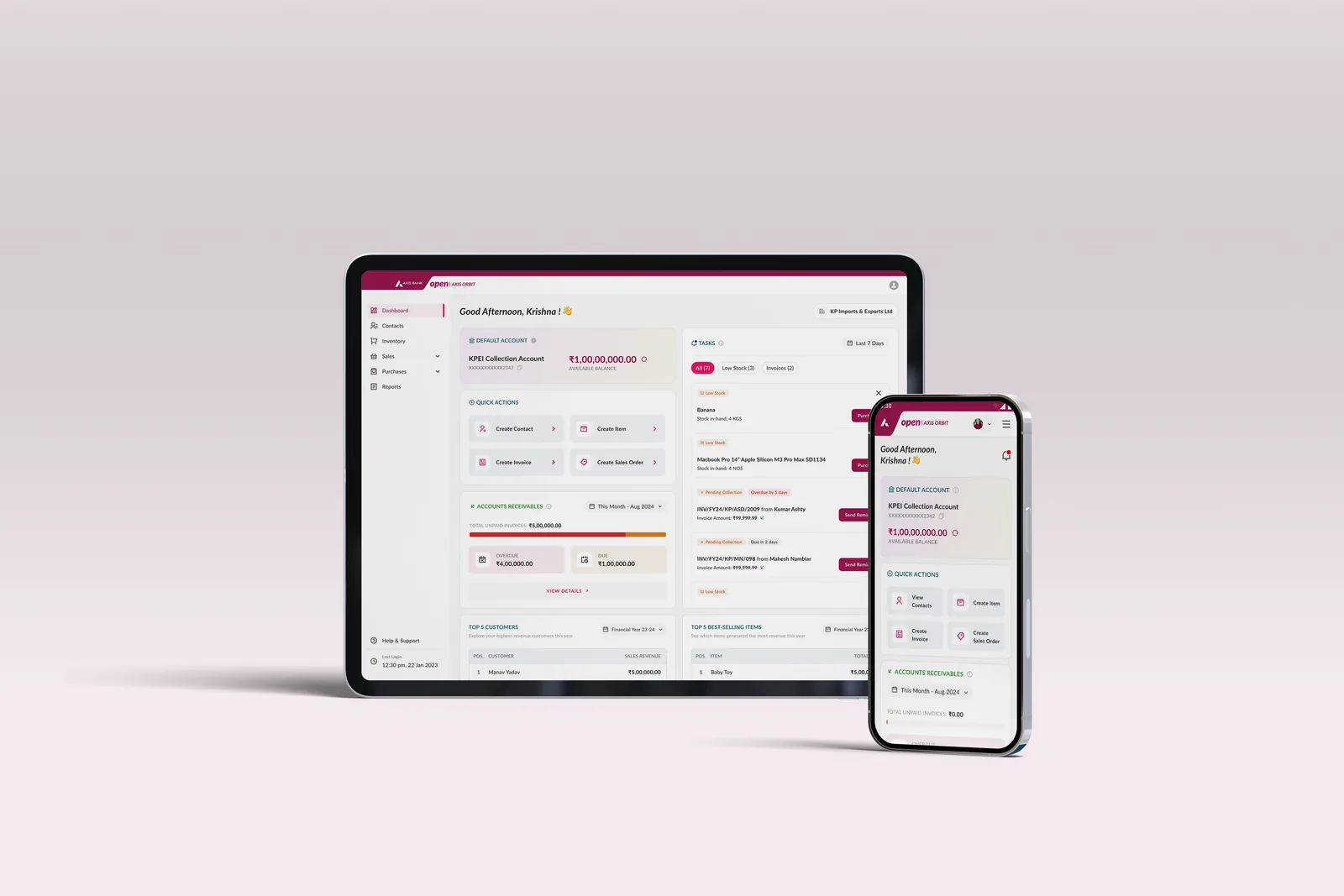
Axis Orbit is a business management platform for small and medium-sized enterprises, built as part of Neo for Corporates, Axis Bank’s unified digital banking platform.
It brings everyday business operations and financial activities into a connected workspace, helping business owners manage their operations efficiently while staying close to their banking services.
02 / The challenge
An in-house alternative.
The initial onboarding of catering businesses relied on an external vendor. Cross-product integration and timely updates became difficult, creating an opportunity to build an in-house platform.
How might we help small and medium-sized businesses keep their operations running smoothly while staying in sync with their financial activities?
03 / Research
Understanding the business behind the user.
Competitor study
To establish a value proposition, I studied the key players in business management and the tools they offered.

What worked well
- Extensive, customisable tools
- Task automation
- Analytics supporting revenue generation
- Responsive experiences across devices
- Third-party integrations
Where gaps remained
- A steep learning curve for new users
- Limited payment and banking services
- Poor or missing customer support
User goals and pain points
I interviewed small business owners in my locality and within my circle of friends to understand where existing products fell short. Four recurring needs emerged.
Lack of centralisation
Moving between multiple platforms made it frustrating to manage and track a business.
Too much information
The volume of metrics and options made it difficult to decide what to prioritise.
Missing important tasks
Restocks and payment due dates were easy to overlook.
Time-consuming tasks
Entering data and keeping records in sync took significant time and effort.
Business objectives
The user research needed to align with the product’s business goals.
Less time, more productivity
Help owners complete tasks and manage their business with minimal effort.
An intuitive interface
Make the experience clear, approachable, and easy to use.
A smooth transition
Enable owners to move from existing platforms with minimal friction and learning.
04 / Design direction
Clarity, familiarity, and less effort.
Research insights and business goals shaped six areas of intervention for the MVP.
Only what is necessary
Prioritise the most useful features and metrics.
Recognisable journeys
Build on familiar business management patterns to reduce the learning curve.
A clean, clear interface
Keep journeys simple, with cues that guide the next action.
Reminders and notifications
Surface important tasks and upcoming payment dates.
Fewer steps
Keep each journey concise and reduce the time needed to complete a task.
Maximum automation
Maintain records with minimal manual effort.
How might we onboard and retain SMEs to confidently manage their business and drive financial growth through Axis Orbit?
Designing in two-week sprints
Development was organised into module-wise, two-week sprints. Alongside the requirements, three principles guided the design work.
- Keep it simple and relatable to evoke confidence.
- Simplify journeys to minimise task completion time.
- Make it equally compelling for new and existing users.
05 / The solution
One connected workspace.
A tailored business management platform that helps SME owners make informed decisions and act on their goals while staying connected to banking services.
Onboarding
Quick and easy set-up.
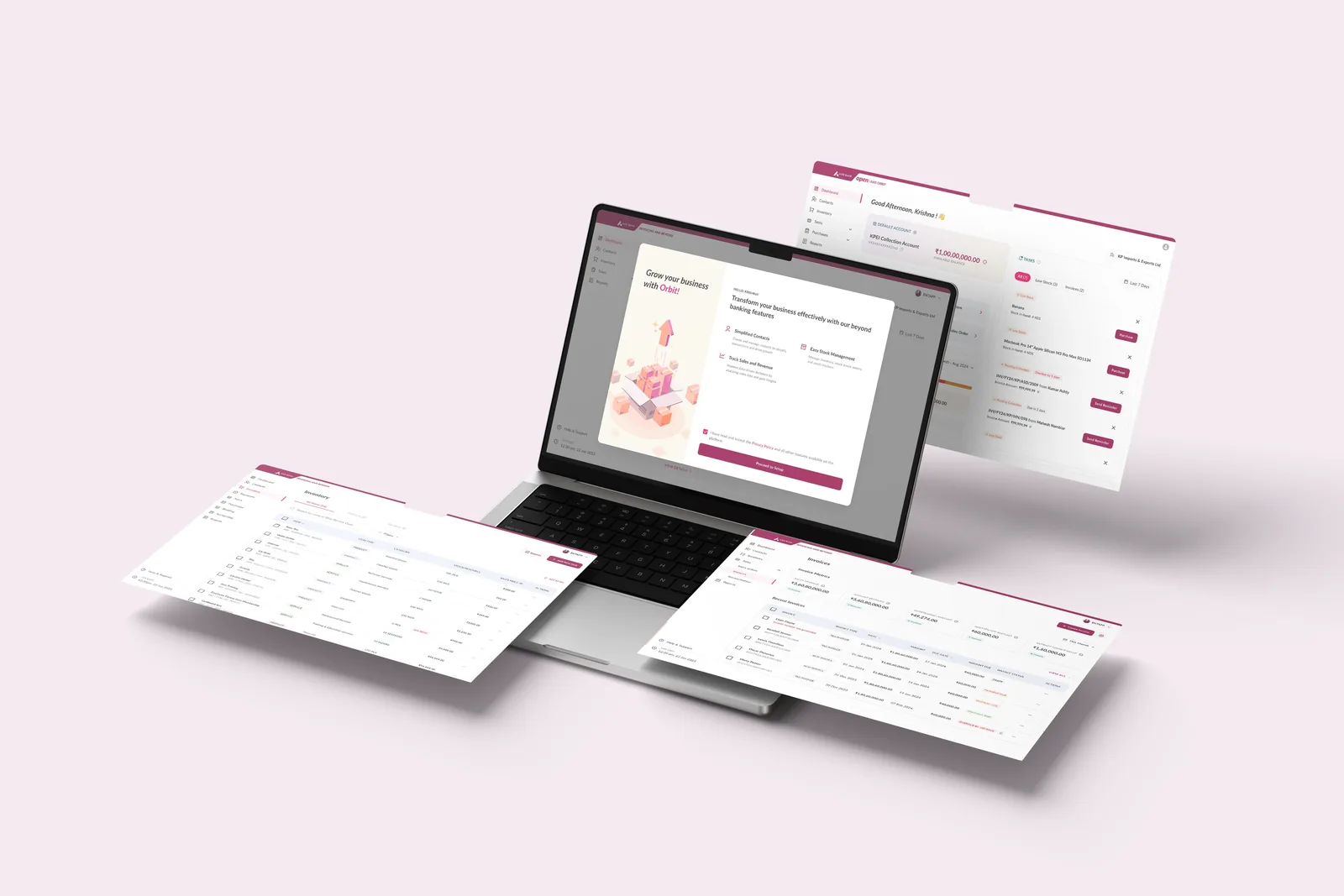
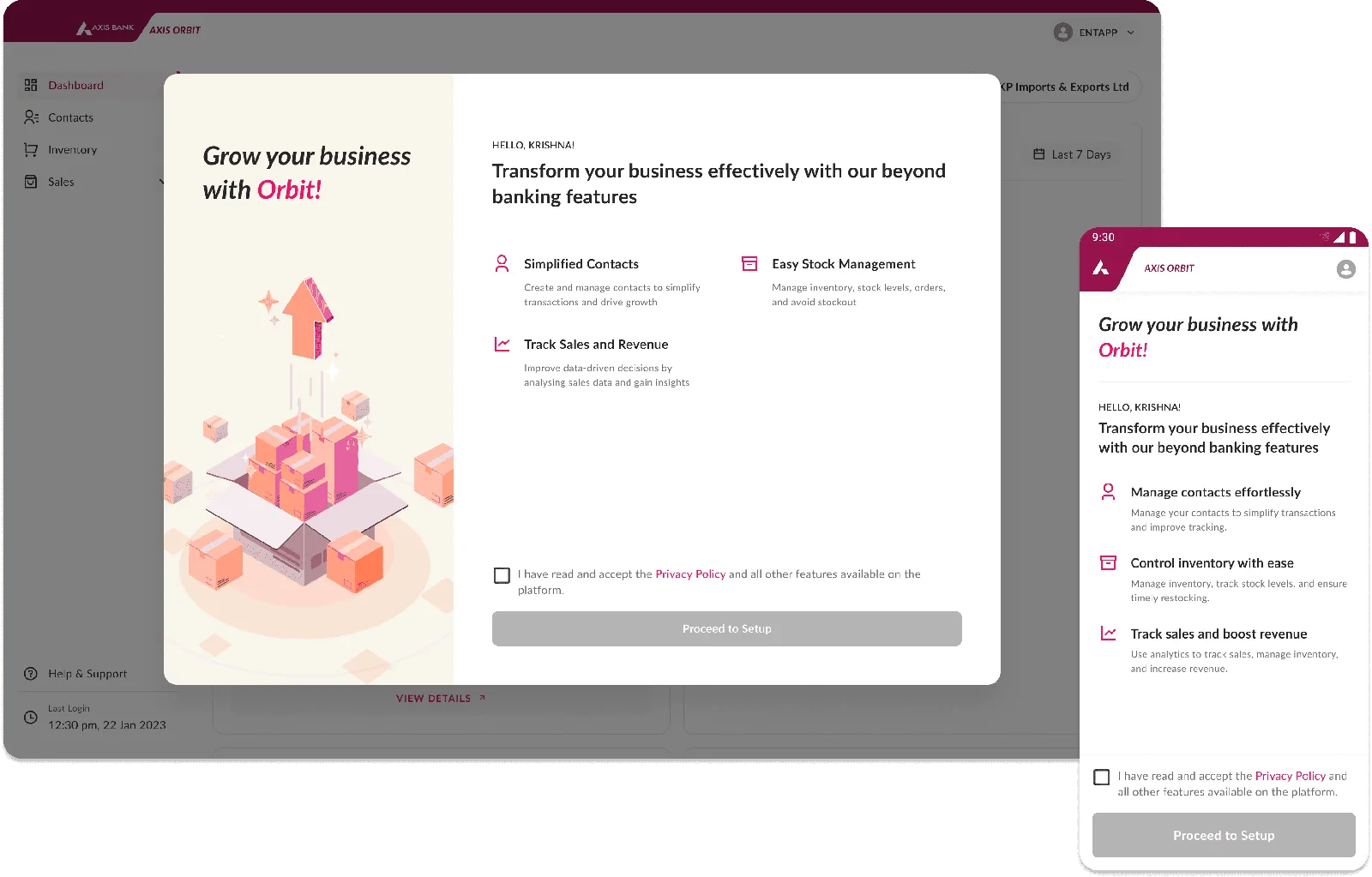
Users enter Axis Orbit through Neo for Corporates. For first-time users, a feature overview and consent approval introduce the platform while keeping the first steps informative and engaging.
Dashboard
Clarity, control, and action.
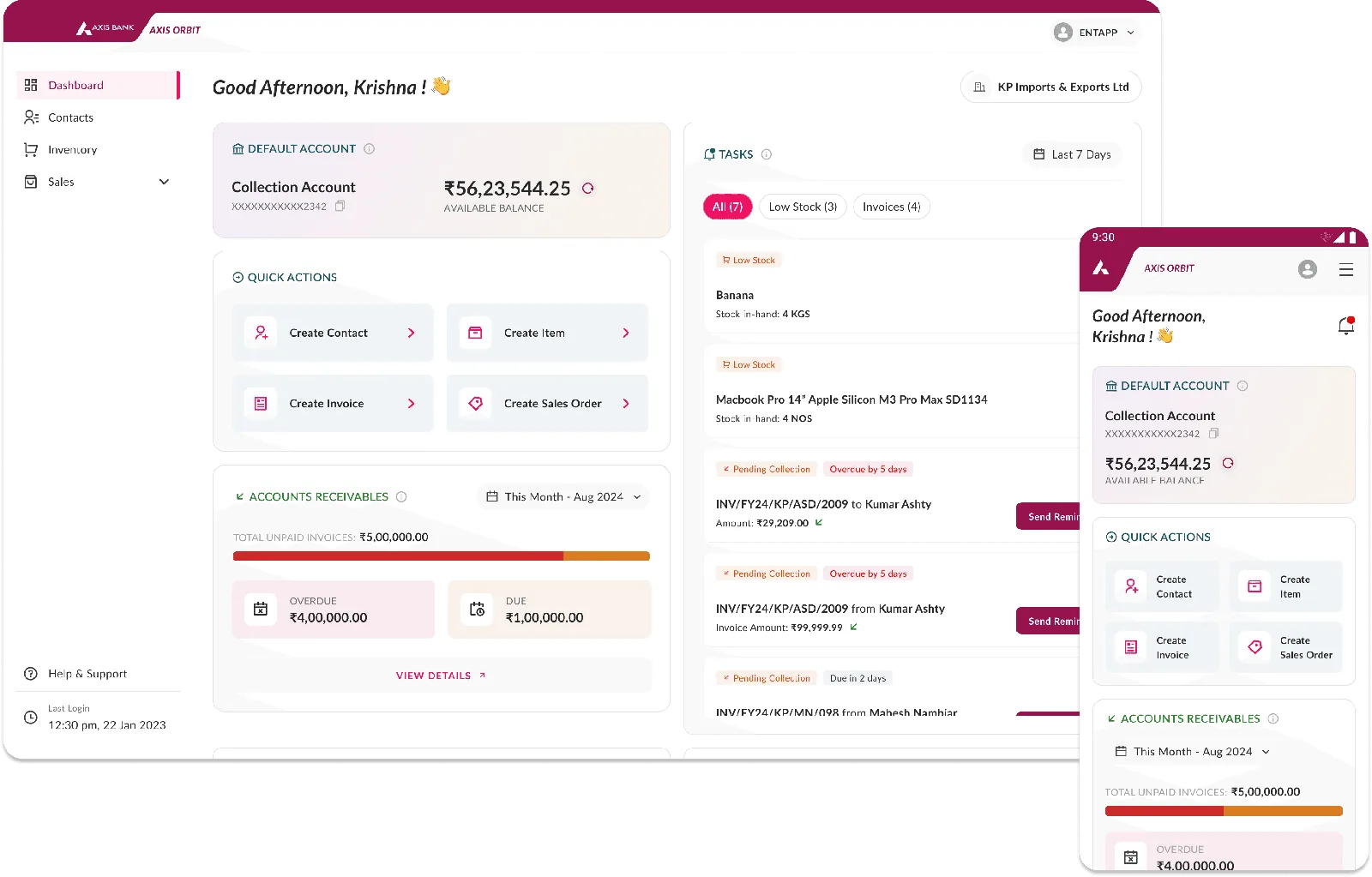
The dashboard brings key business activities together: account balance, quick actions, task management, accounts receivable, top-selling items, and top-paying customers. Information is prioritised for clear navigation and useful insights across desktop and mobile.
Contacts
An extensive business directory.
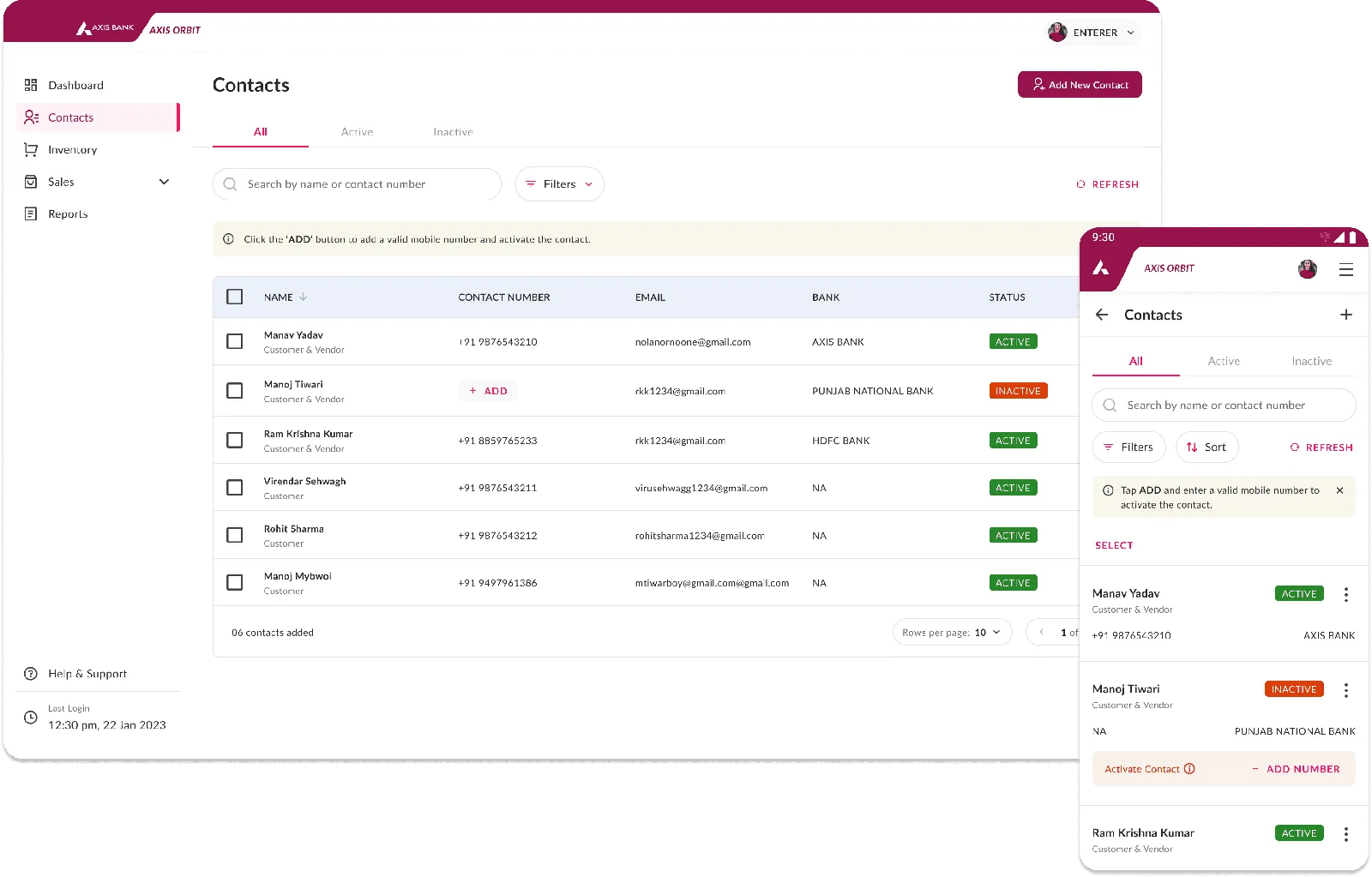
Customers and vendors can be managed in one place, including phone numbers, email addresses, and bank associations. Adding a contact number is made easy because it determines the contact’s status, with that relationship explained upfront.
Inventory
Easy stock management.
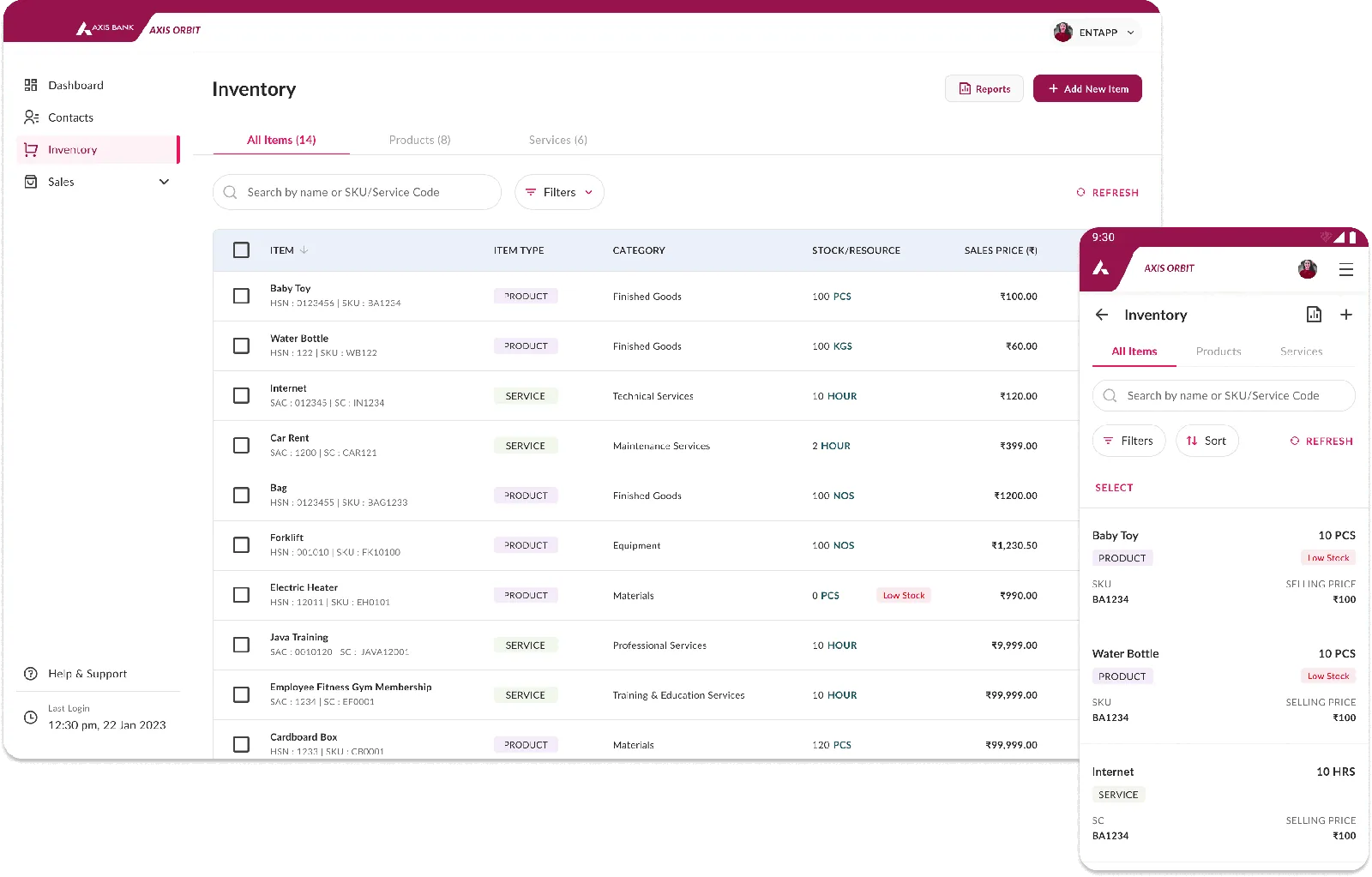
Owners can organise stock by item type, price, and stock level, then search and filter their inventory. The module also supports low-stock tracking and reports.
Sales order
Quick sales.
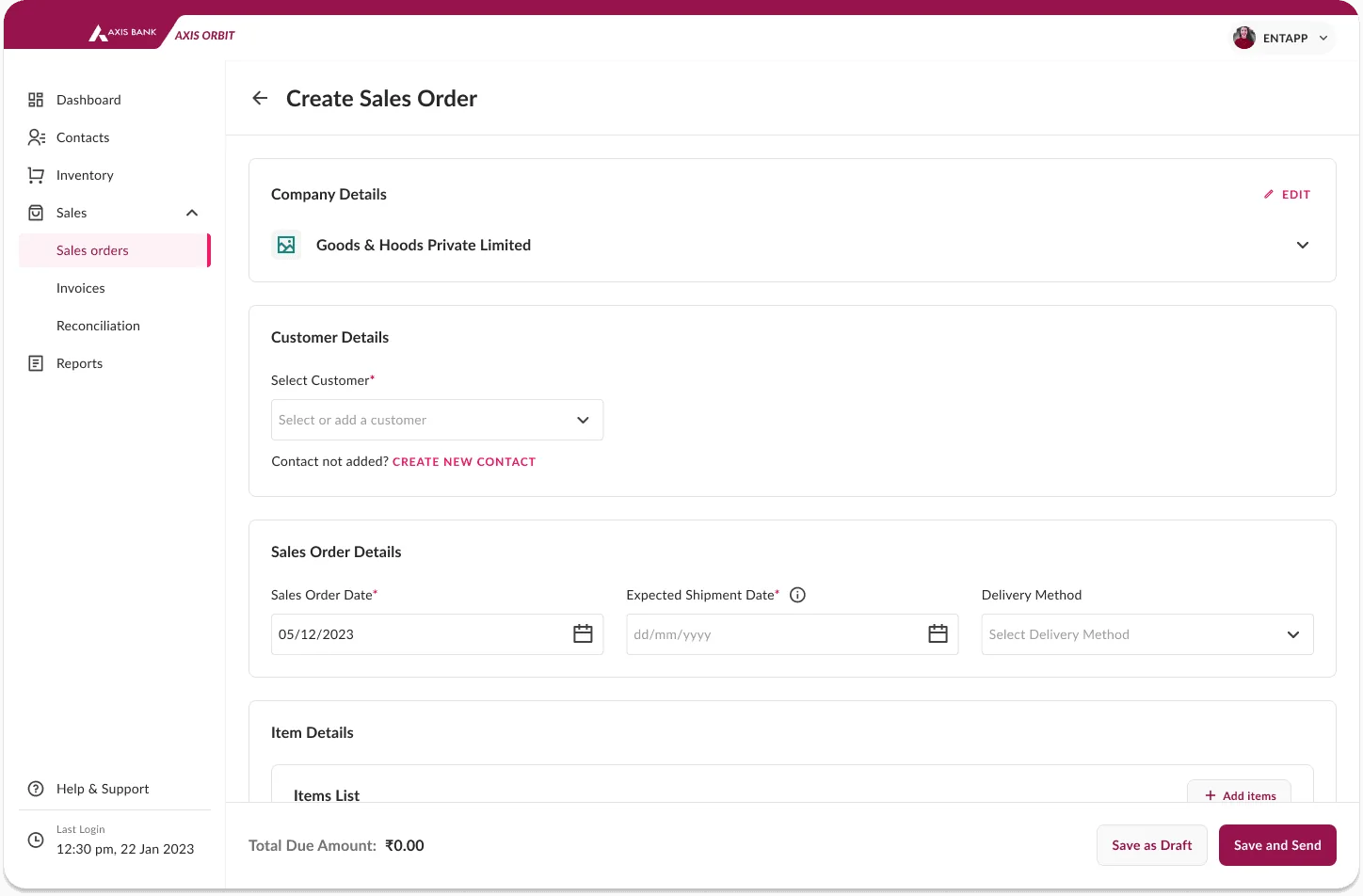
With contacts and inventory in place, owners can create and manage sales orders linked to their stocked items, then update order details and status.
Invoice
Faster payments.
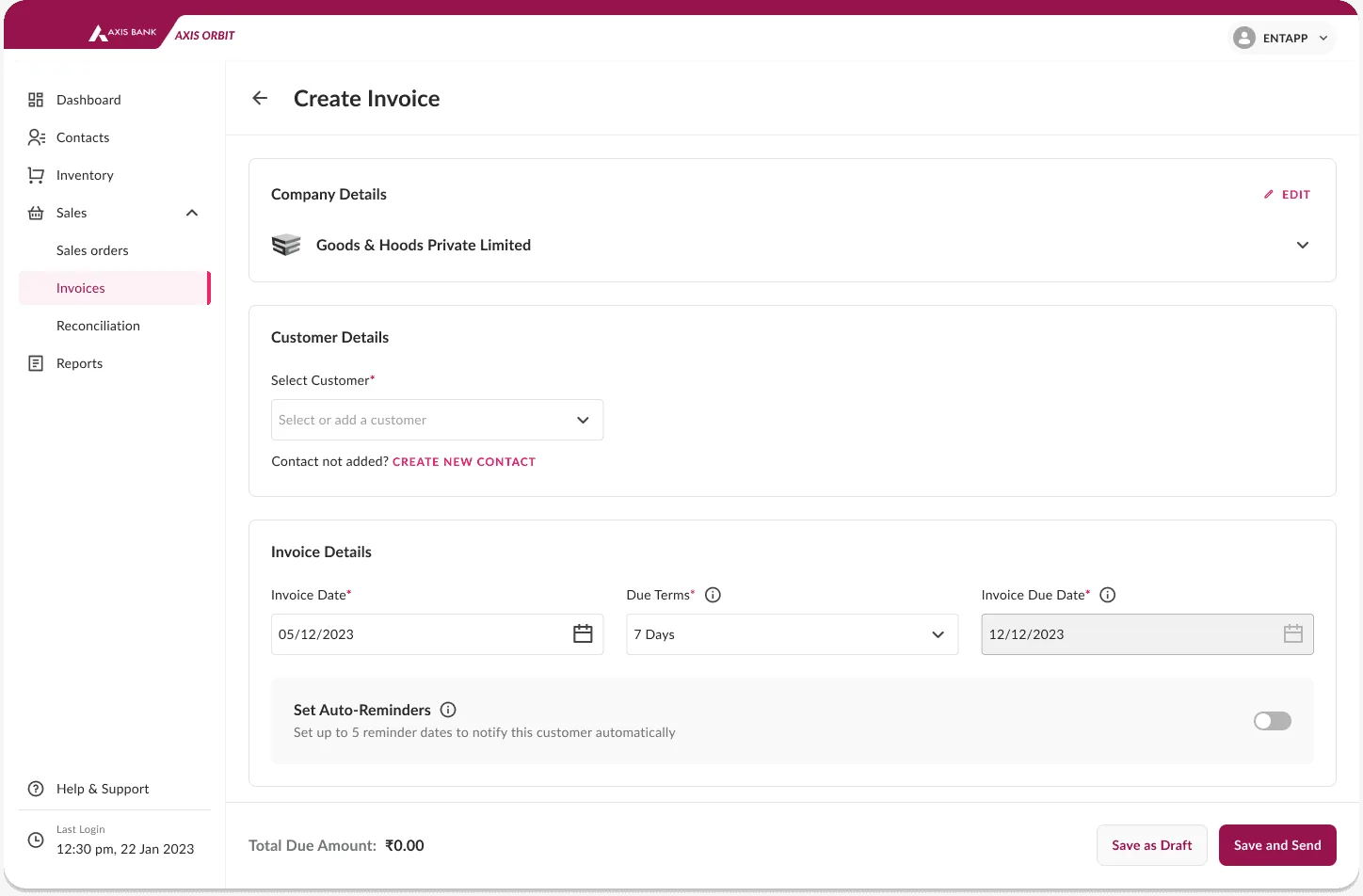
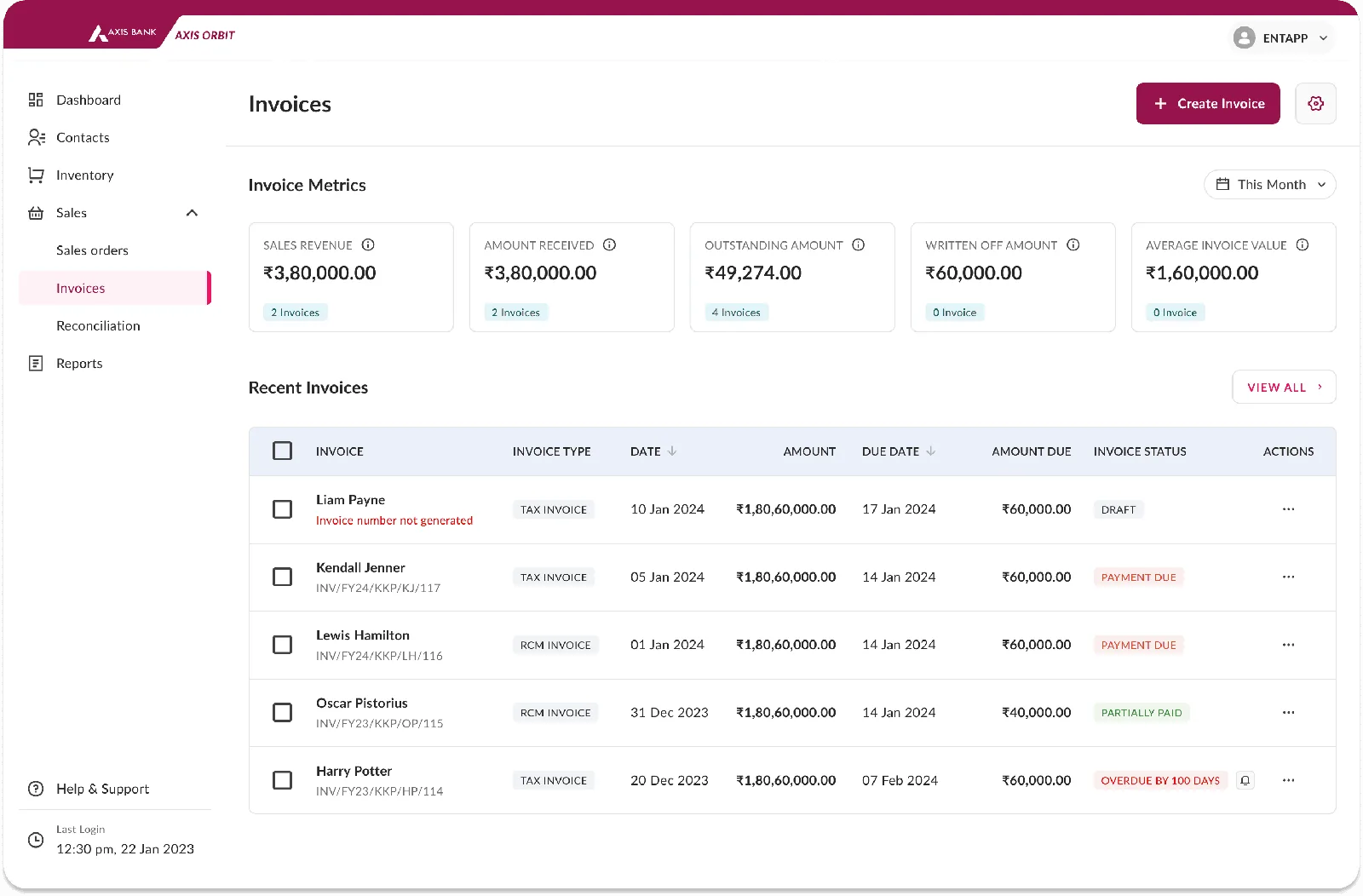
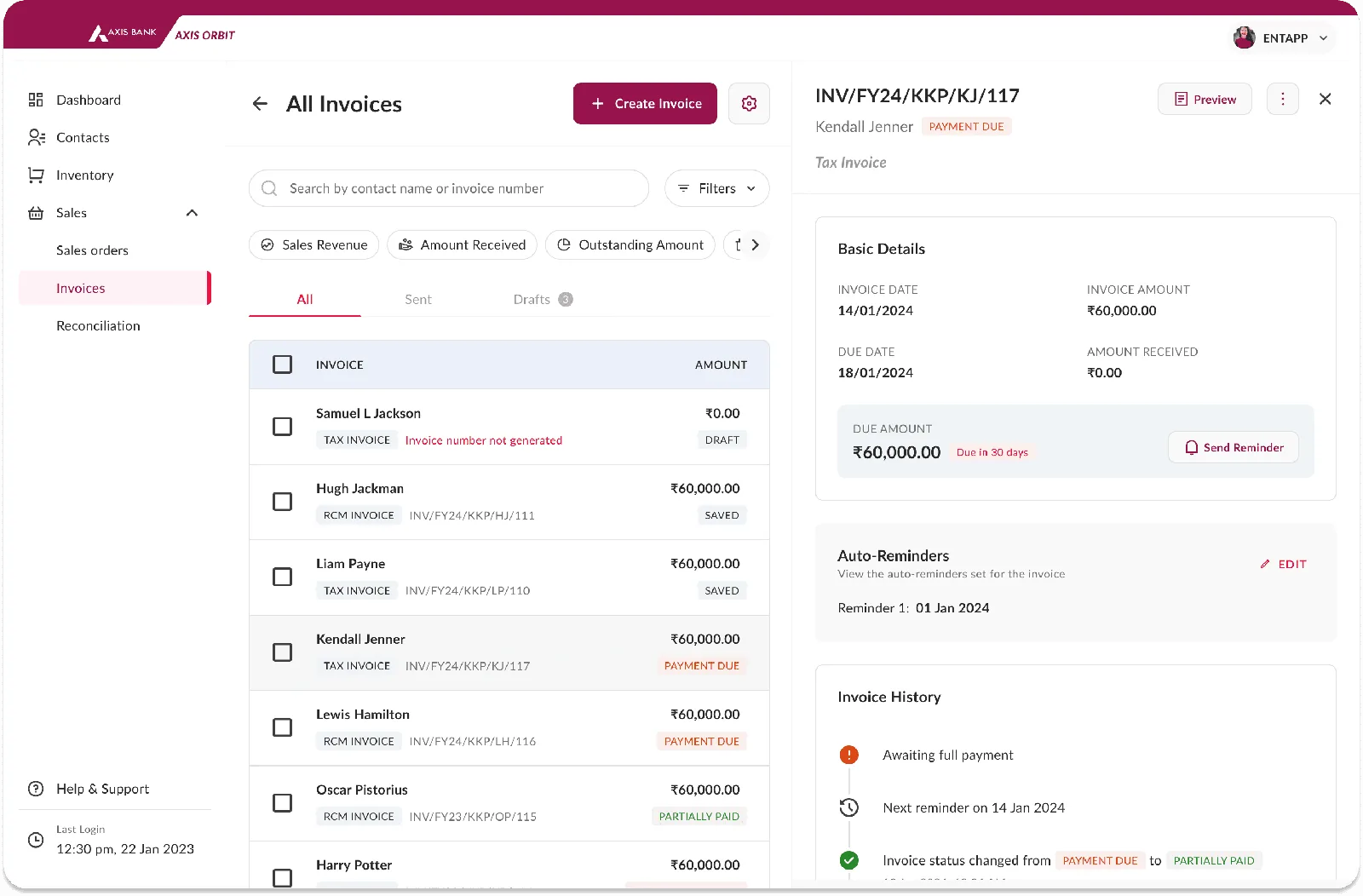
A guided form helps owners choose customers, set due dates, and configure automatic reminders. The module supports creating, managing, and tracking invoices throughout the transaction.
The invoice dashboard surfaces key metrics to support decisions and filtering.
A split view keeps invoice details beside the invoice list, making it easier to move between invoices while checking dates, due dates, reminders, payments, and activity.
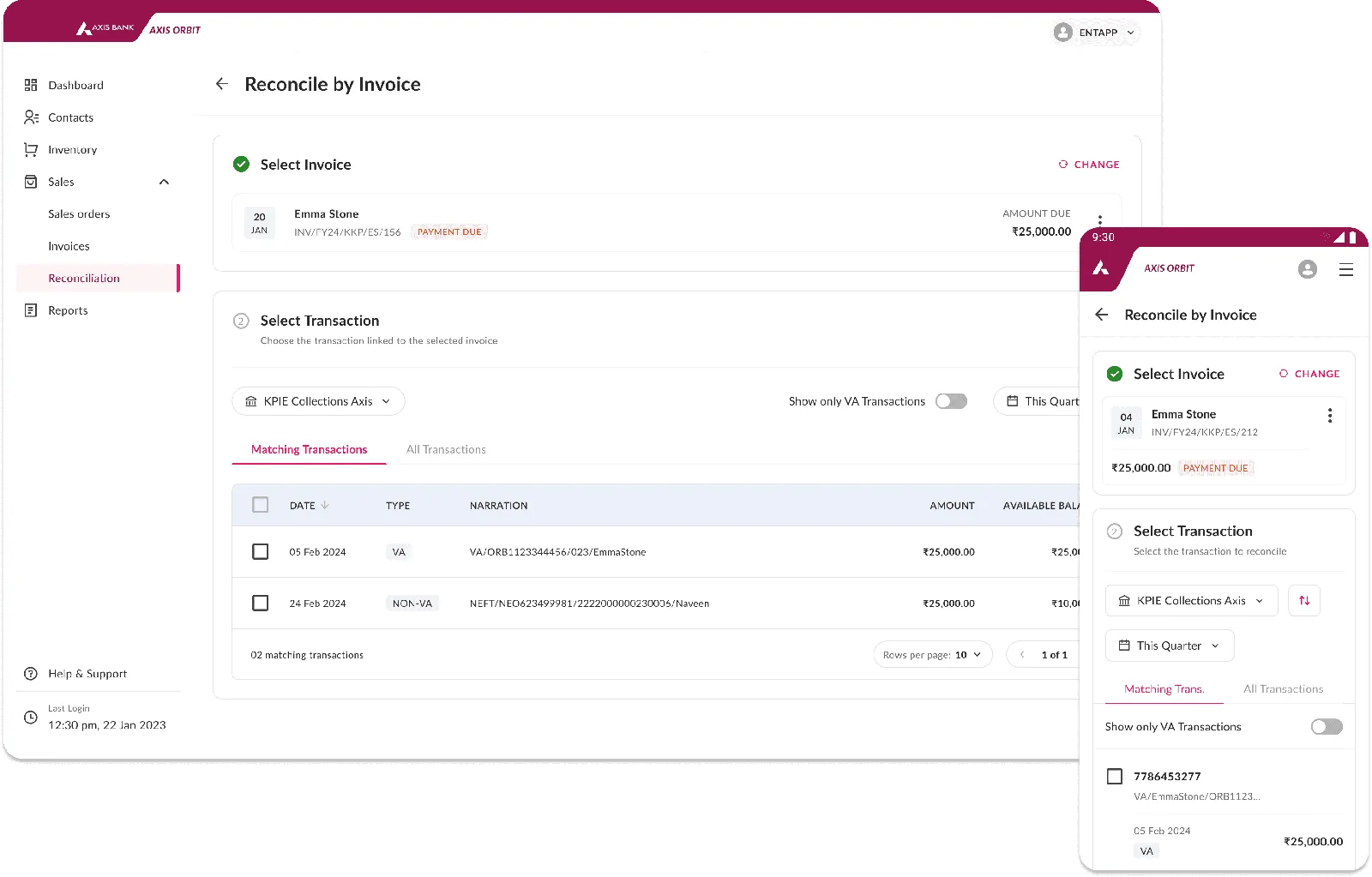
Reconciliation
Precise payment matching.
Owners can match payments to invoices, or invoices to payments, to maintain accurate financial records. The flow helps track received amounts, resolve discrepancies, and keep account statements up to date.
06 / Learnings
From research to Phase 1 rollout.
Next steps
The product decisions were informed by user interviews. The next step is usability testing to validate the assumptions and experience choices. Payments integration is the next major milestone to make business management more connected.
What I took away
I worked on Axis Orbit from the start through its Phase 1 rollout. As my first professional project, it gave me the opportunity to contribute to a large product and make meaningful design decisions.
I learned to collaborate with fellow designers, explore ideas, and adapt to changing directions. Working closely with developers and product managers helped me understand technical constraints and create clear documentation for smoother handoffs.