Systems study · 2022
KMRL: Connecting station systems and passenger journeys
- ROLE
- Researcher & UX Designer
- TEAM
- 2-person team
- DURATION
- 3 months · 2022
01 / Overview
See the metro station as a connected system.
This project studies the operational structure and management of individual Kochi Metro Rail Limited stations through systems thinking. It maps the people, roles, responsibilities, and information flows that keep station operations running.
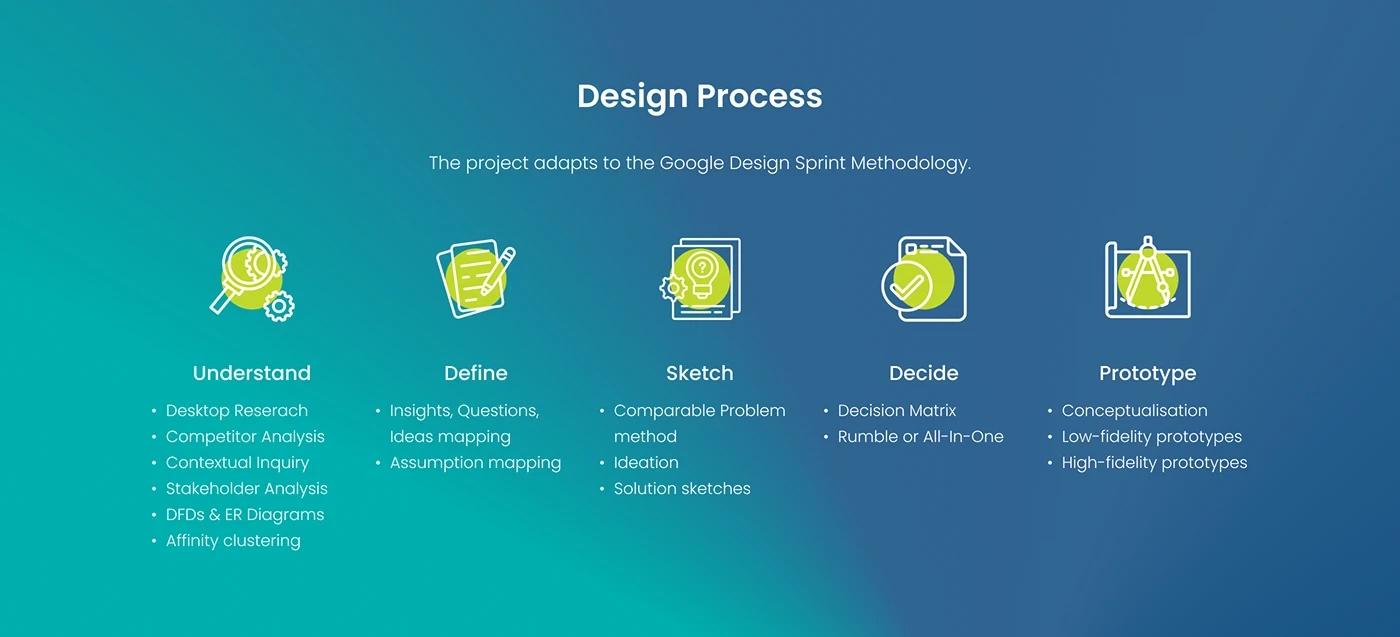
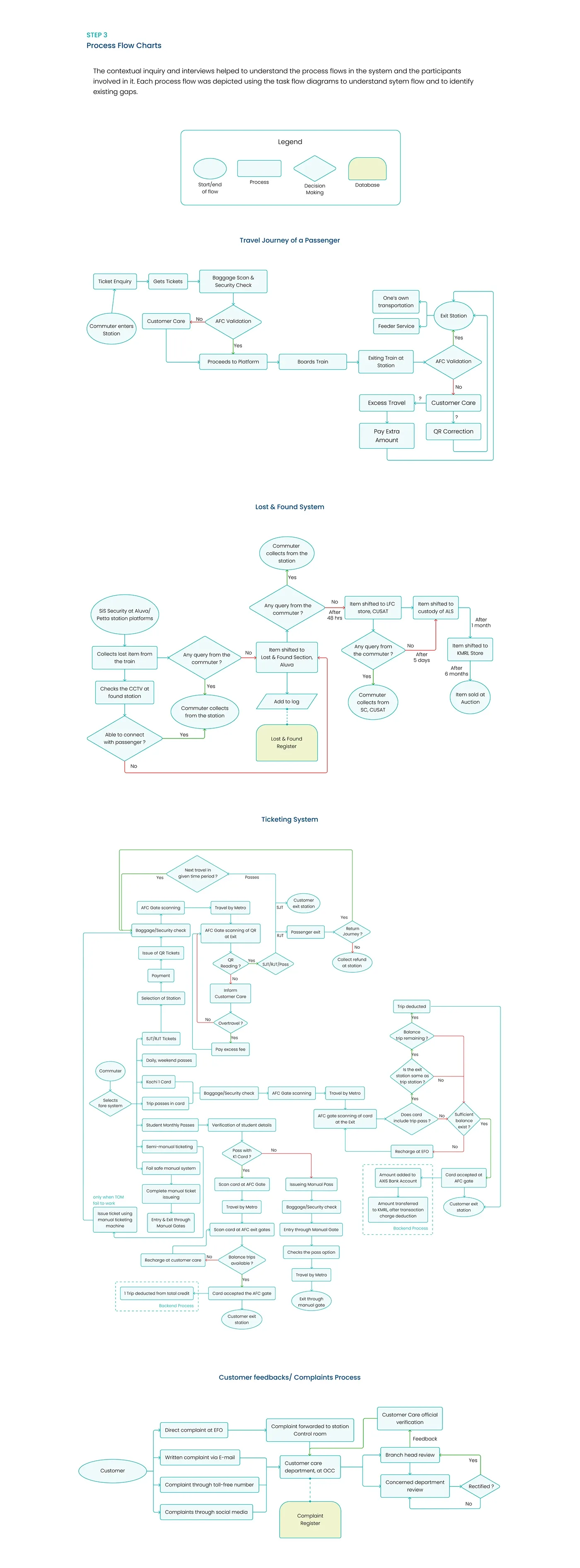
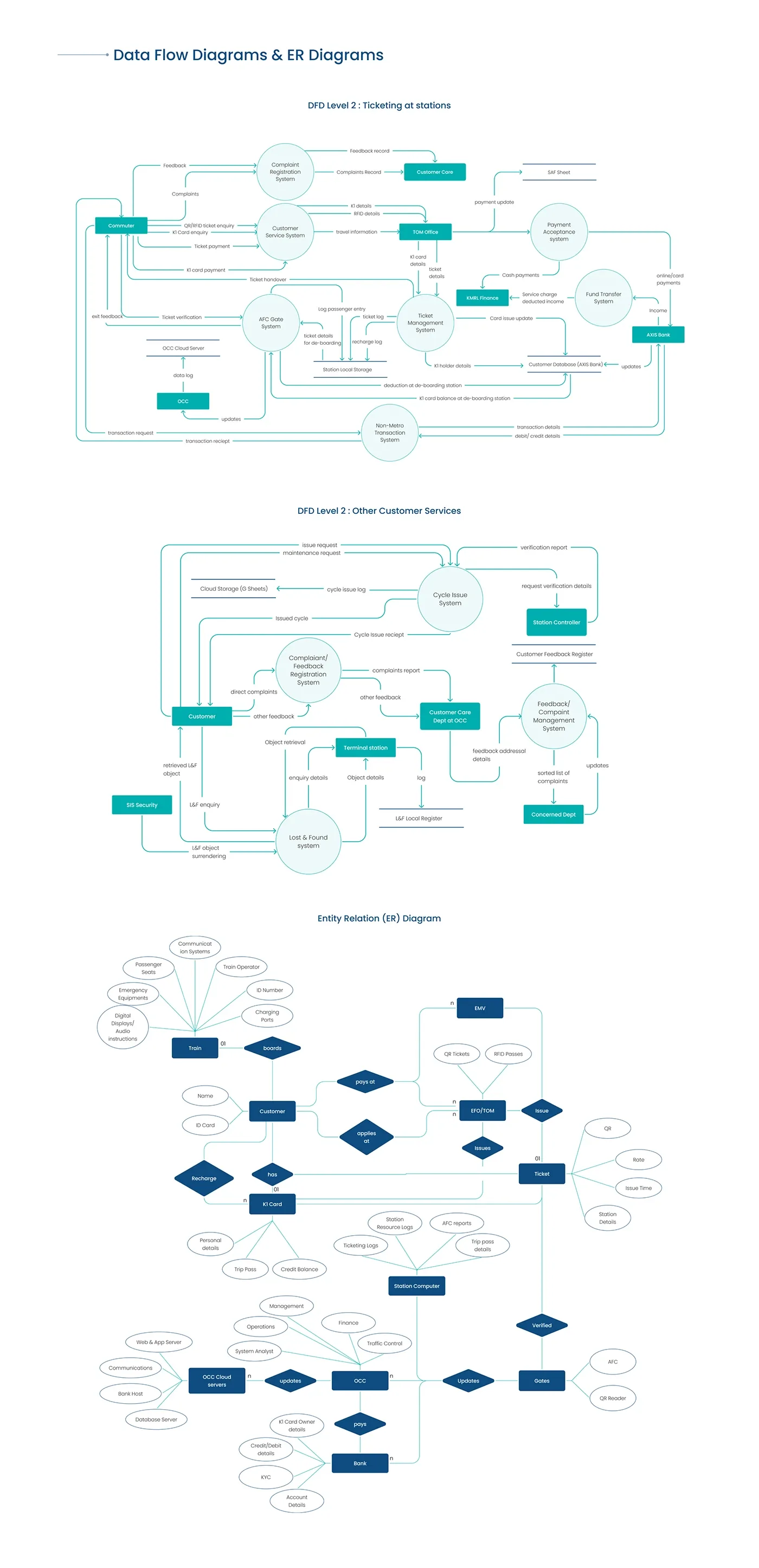
The scope is station operations, where multiple subsystems and stakeholders work simultaneously. The study uses organisational charts, process charts, data flow diagrams, and entity-relationship diagrams to identify inefficiencies and opportunities.
02 / Systems research
Map the work behind the passenger journey.
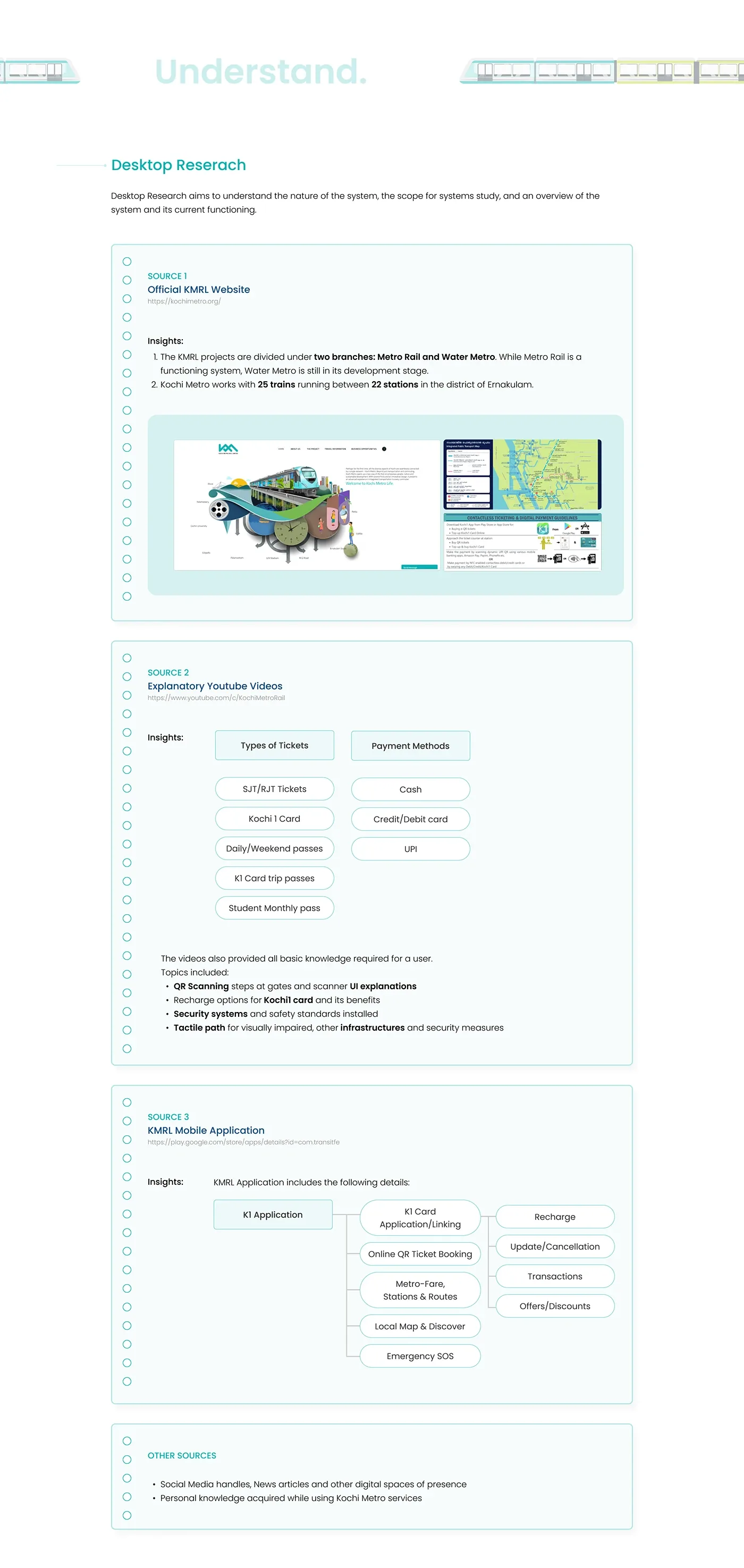
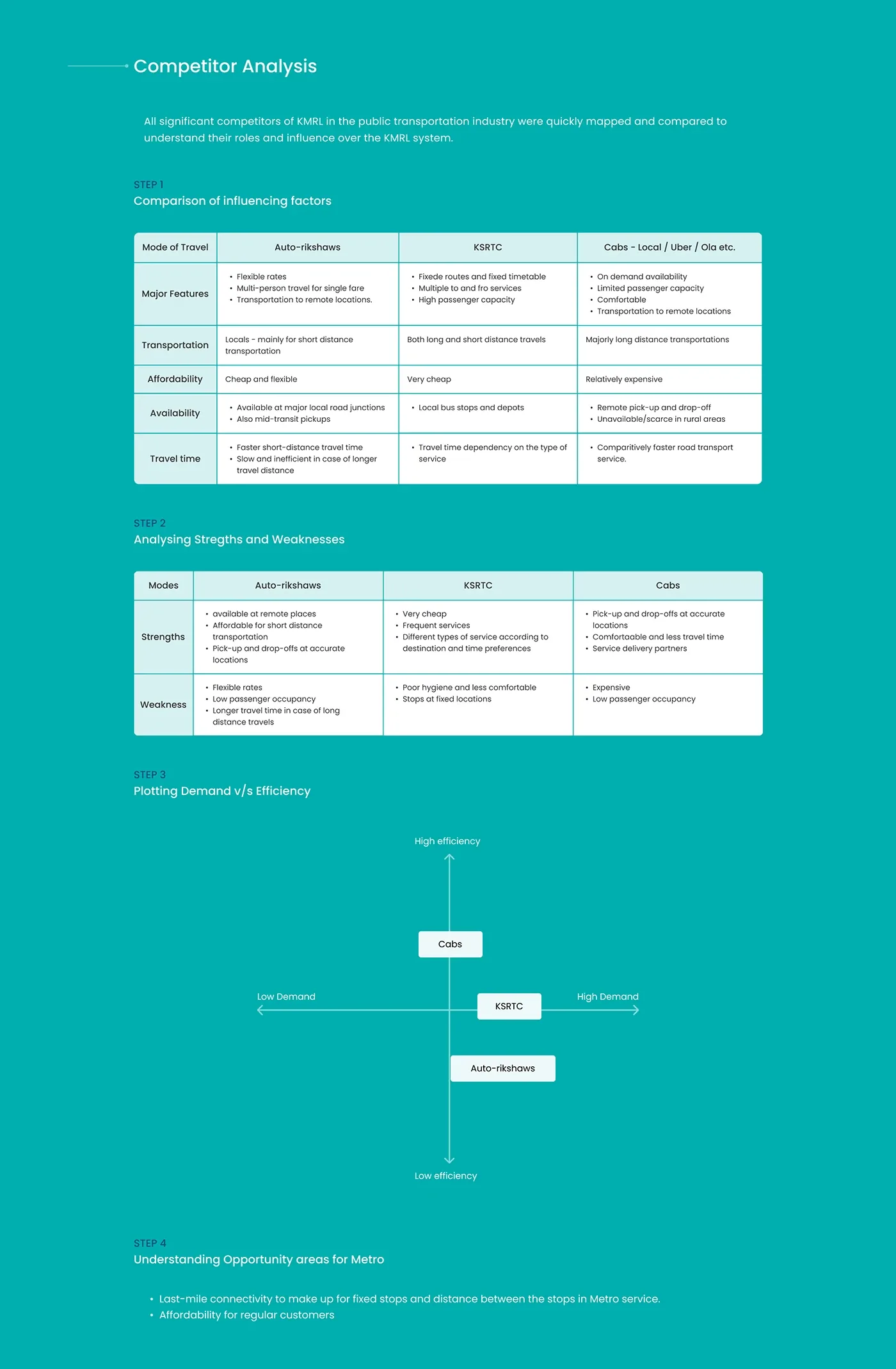
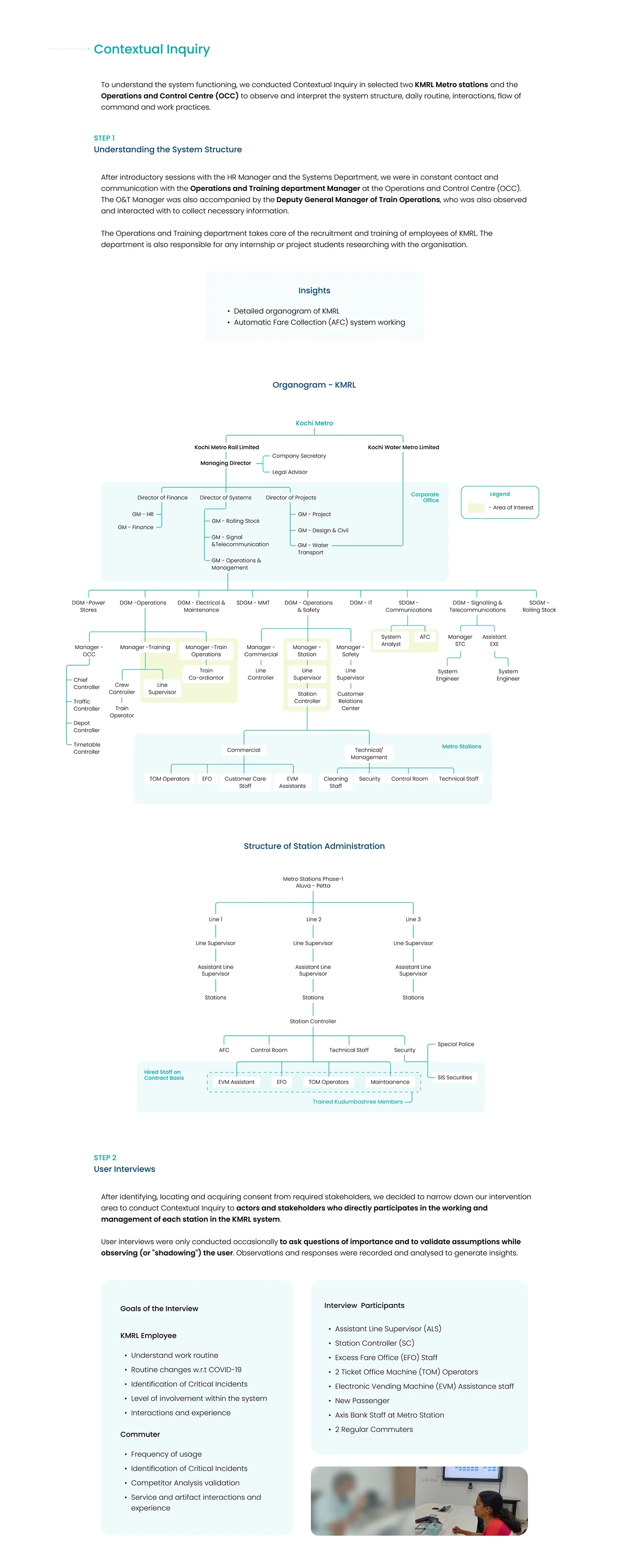
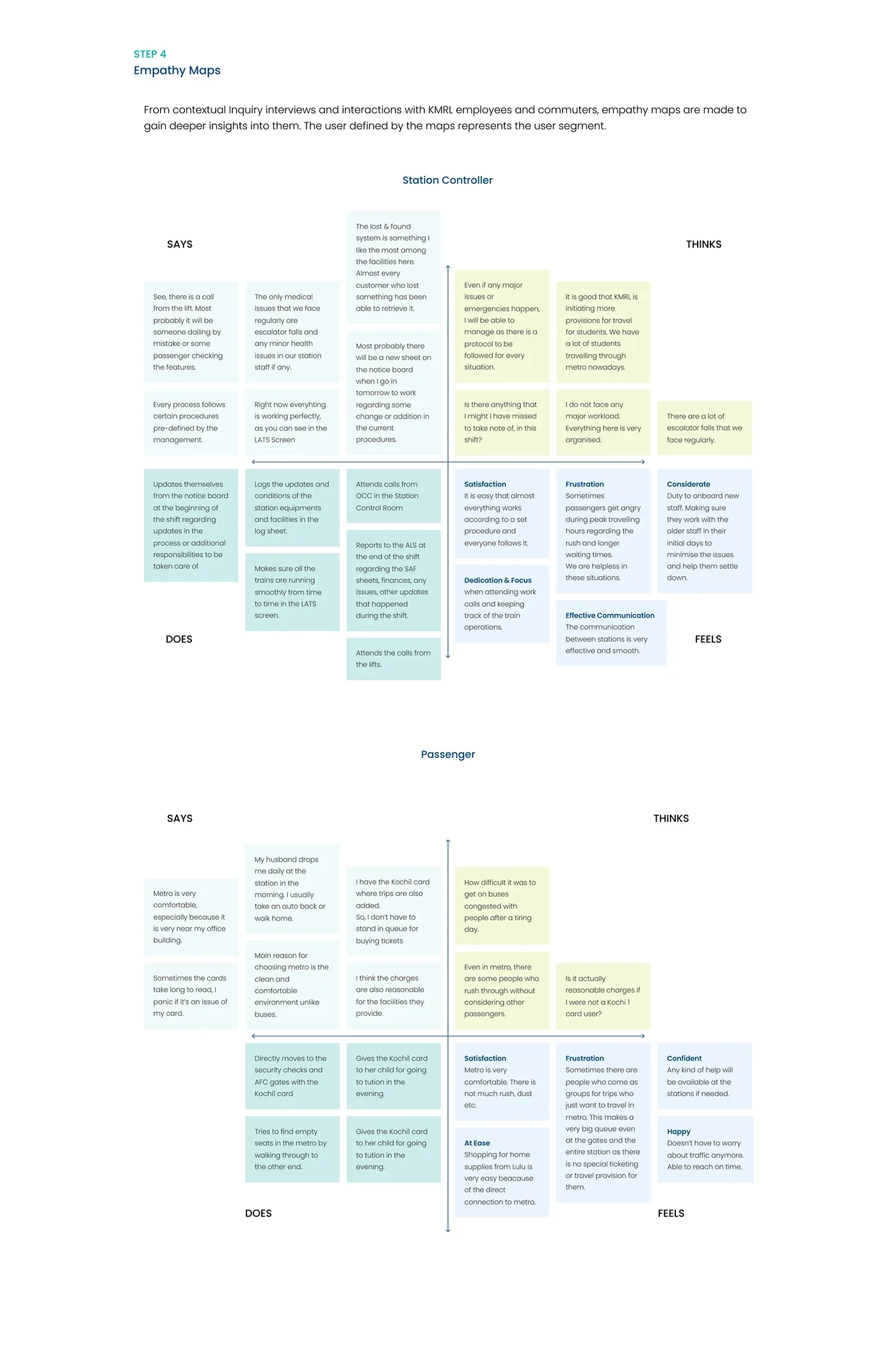
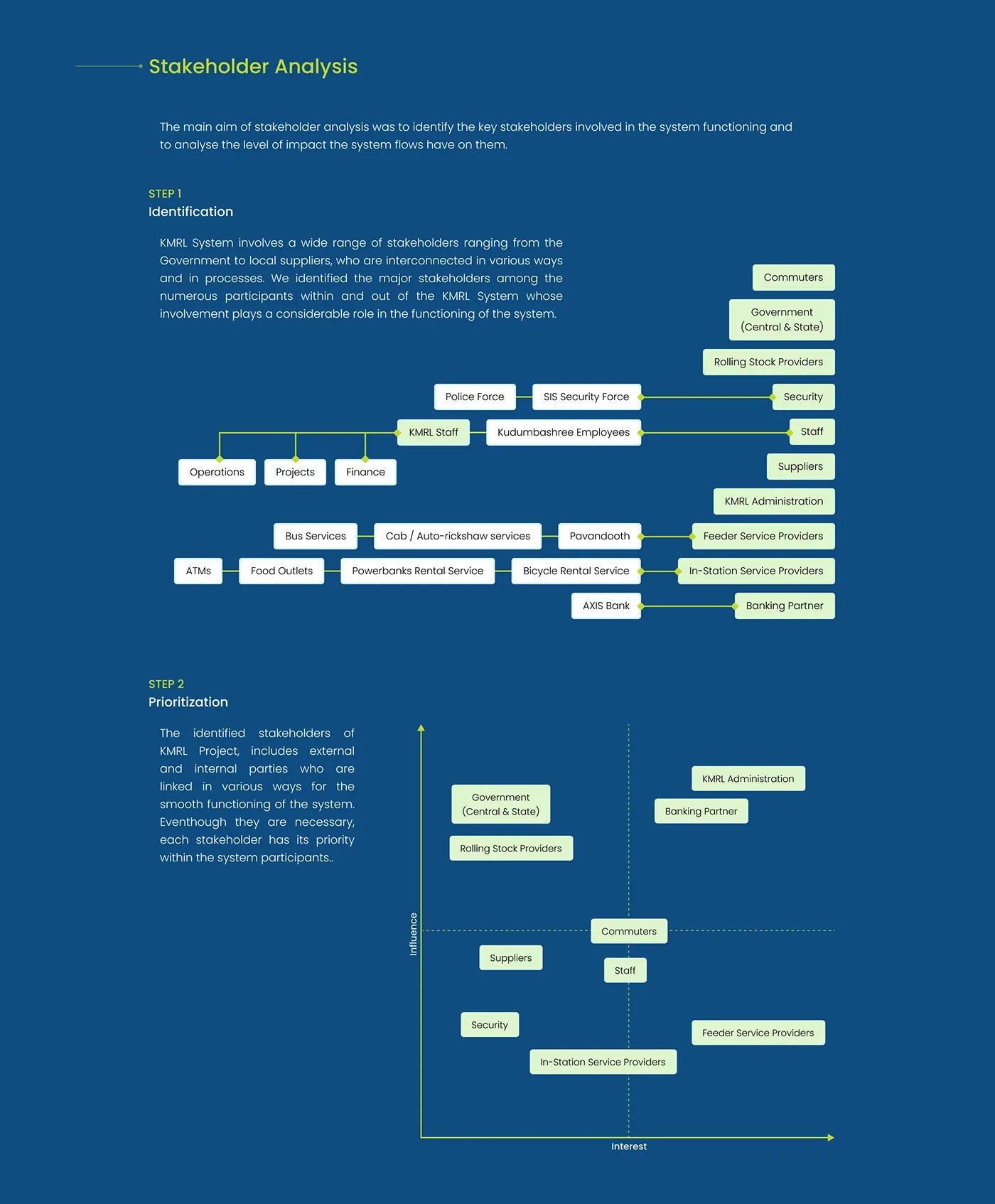
KMRL is responsible for implementing, operating, and maintaining Kochi’s metro system. Understanding station management meant looking beyond individual screens to the organisational structure and the work performed across departments.
Understand stakeholders and roles.
Follow tasks and information.
03 / Opportunity areas
Connect operational friction to design opportunities.
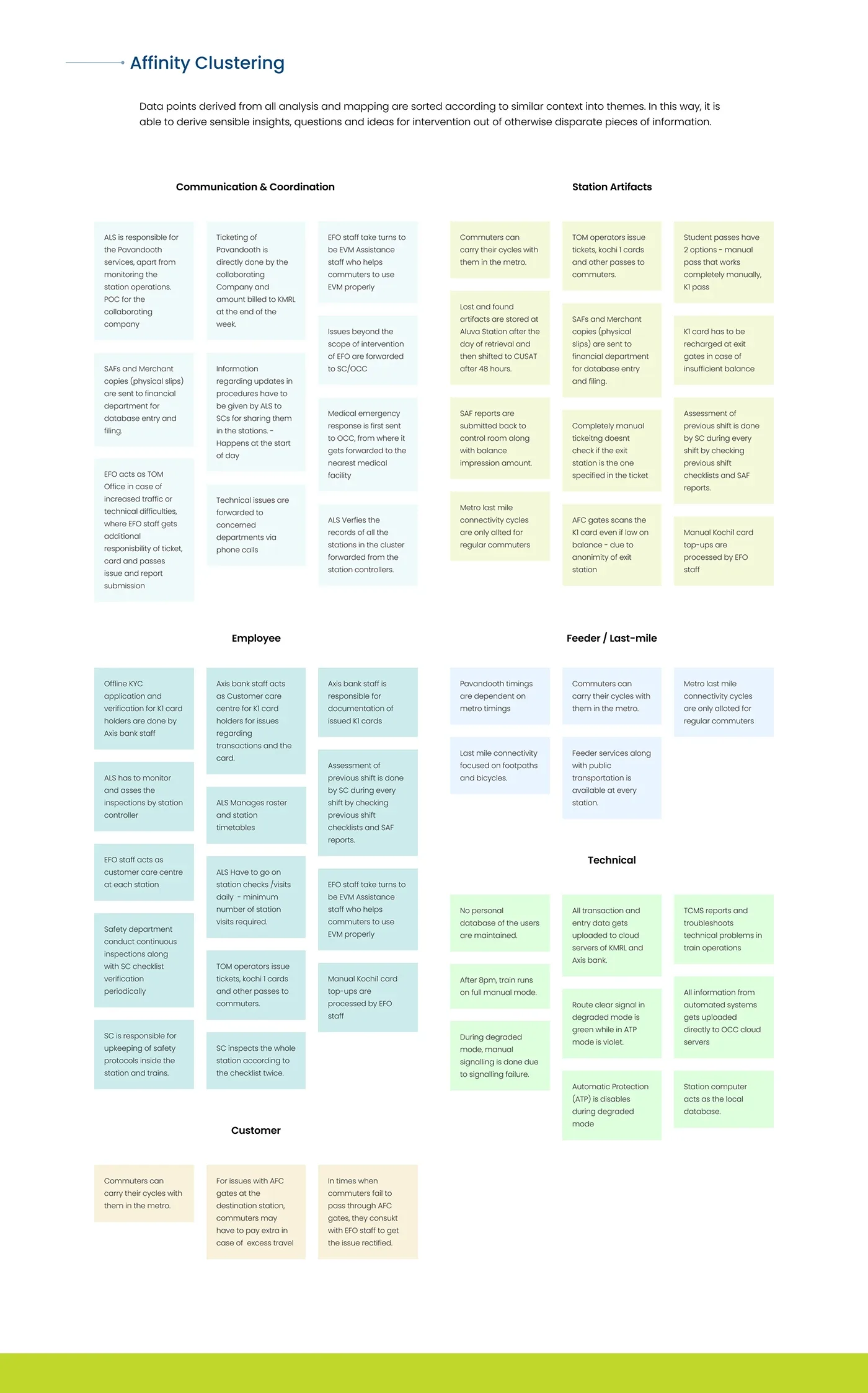
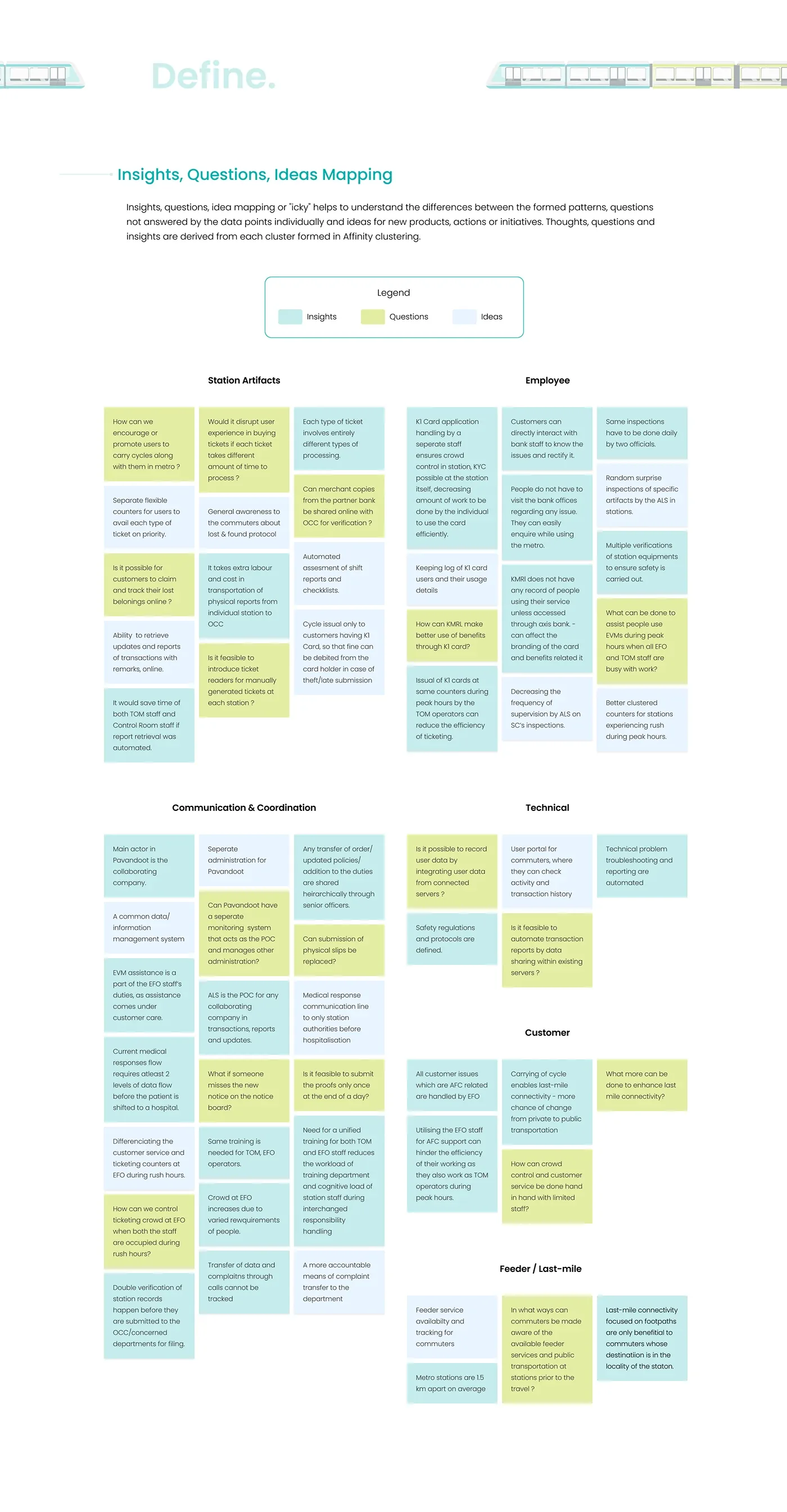
Affinity clustering grouped observations into themes including communication, employees, customer service, station artefacts, technical systems, and last-mile connections. An insights–questions–ideas map helped turn the patterns into possible interventions.
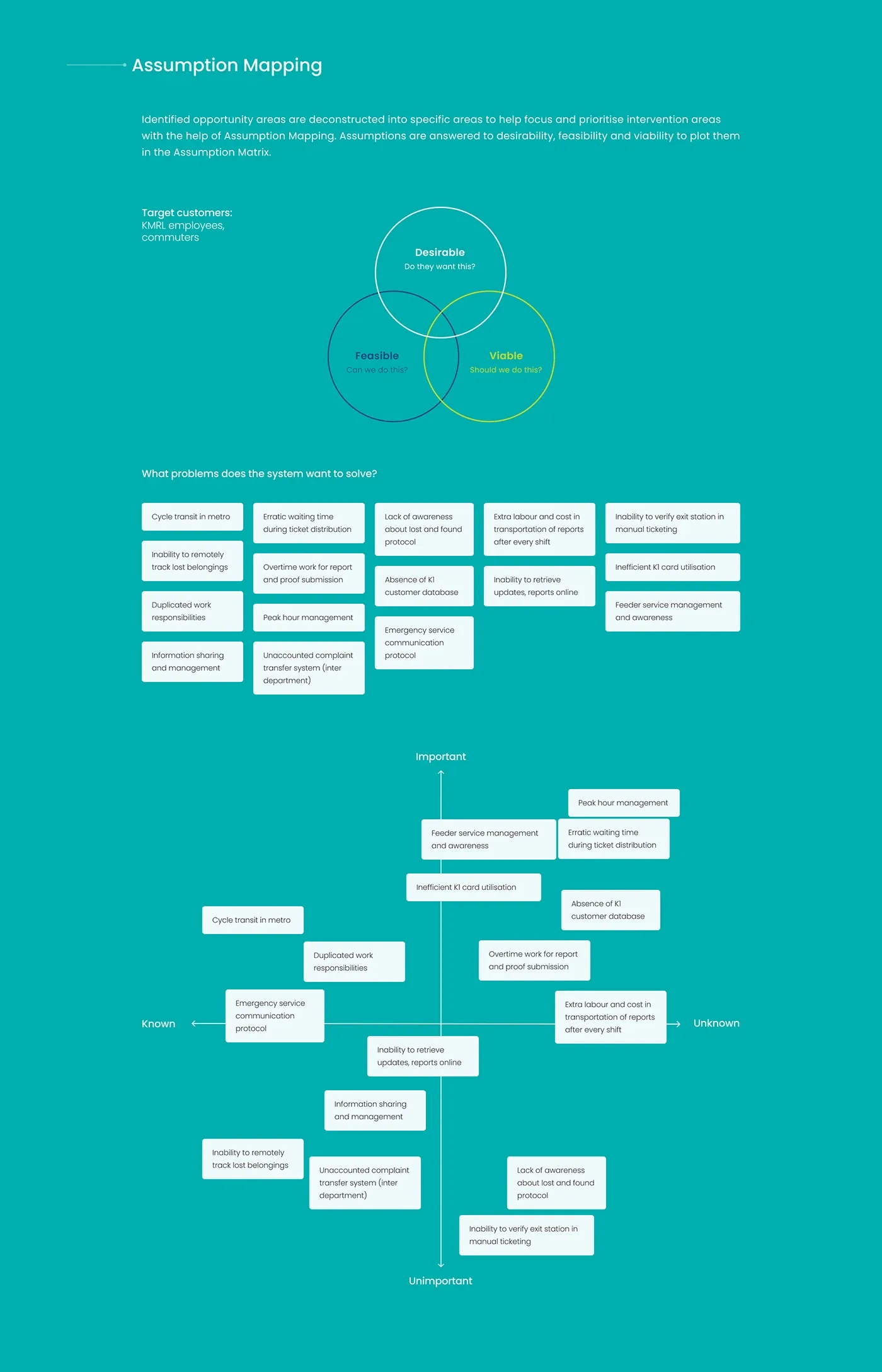
Prioritise connected problems.
Crowding and ticket queues
Peak-hour traffic brings different ticketing and customer-service needs into the same limited space.
Card and customer information
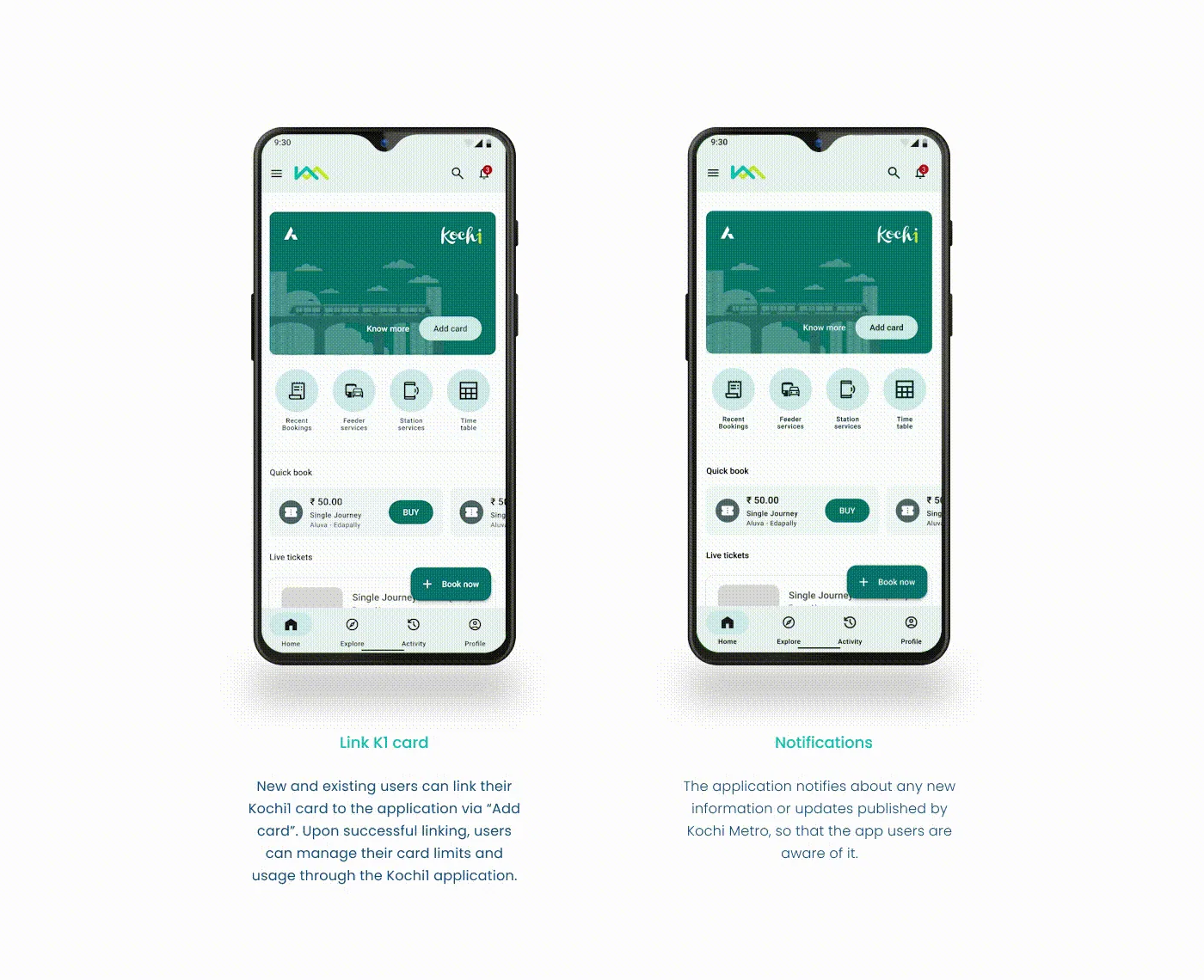
Kochi 1 card use and the application offered opportunities for more connected customer information and services.
Manual reporting
Physical reports, merchant copies, and repeated verification add operational work between station subsystems.
Last-mile awareness
Better visibility of feeder services and station facilities can support the complete journey.
04 / Design direction
Evaluate both station changes and digital services.
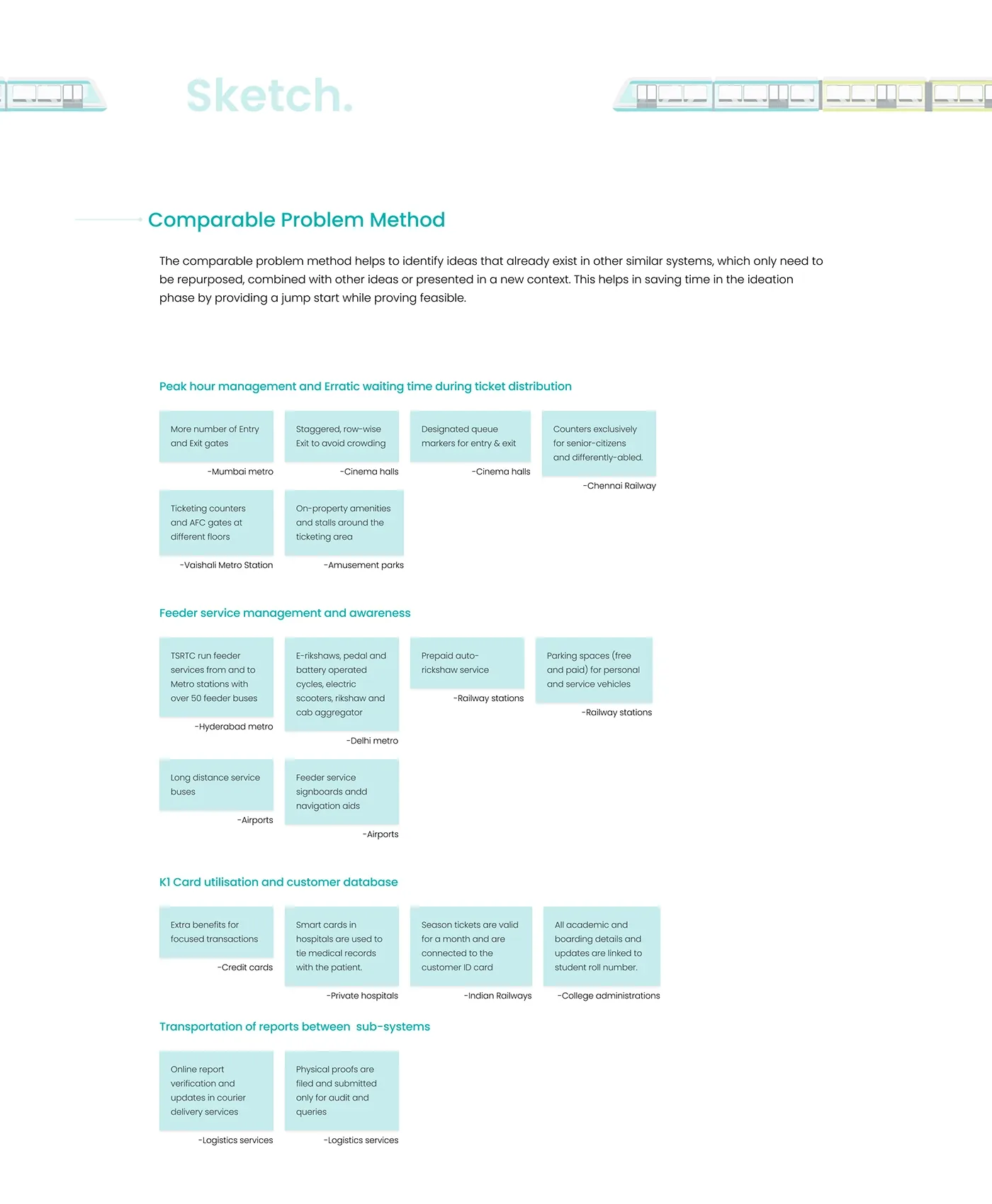
Comparable problems in other systems provided starting points for ideation. Ideas ranged from ticket counter and gate arrangements to online report handling, card integration, and a redesigned passenger application.
Explore, then prioritise.
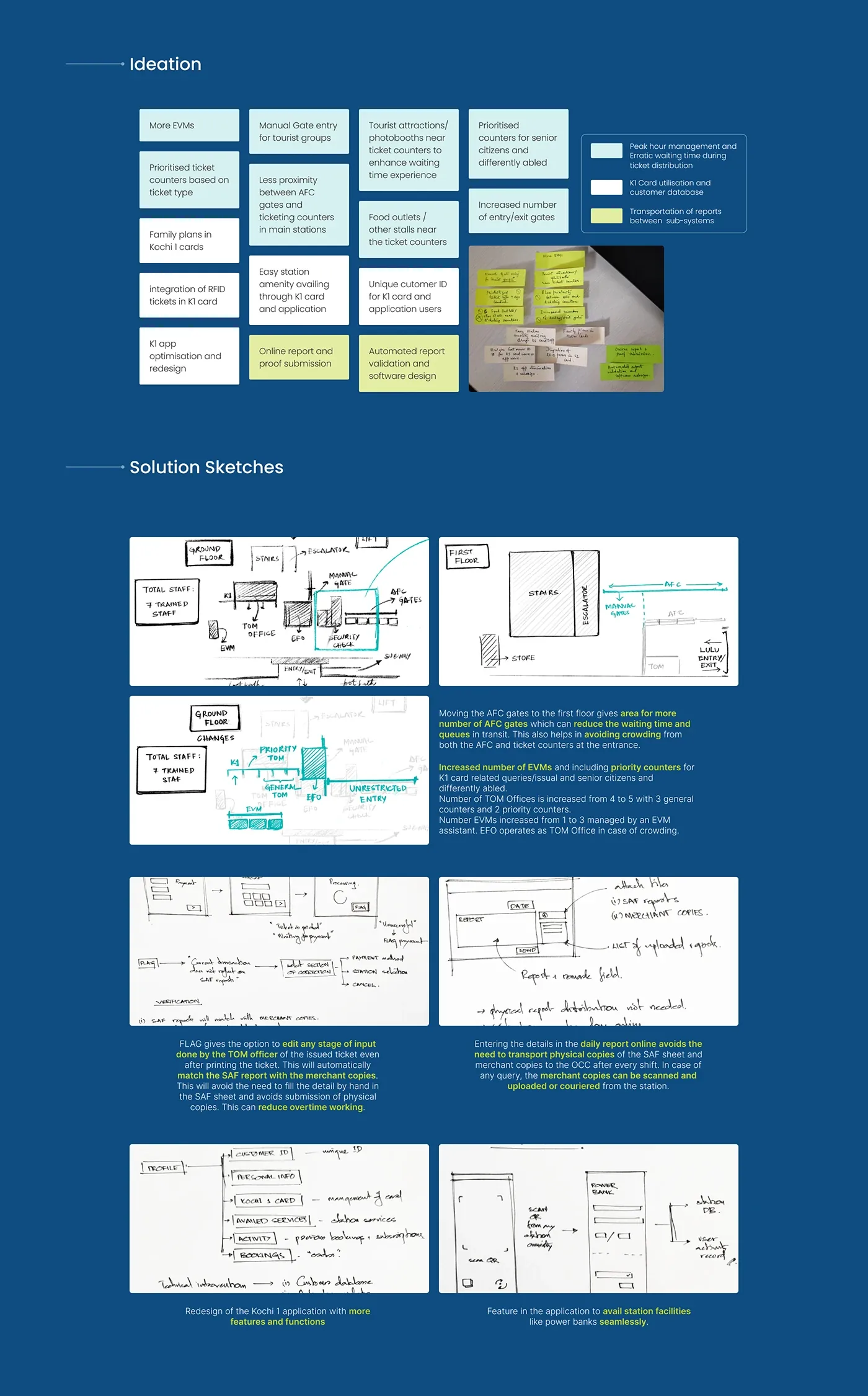
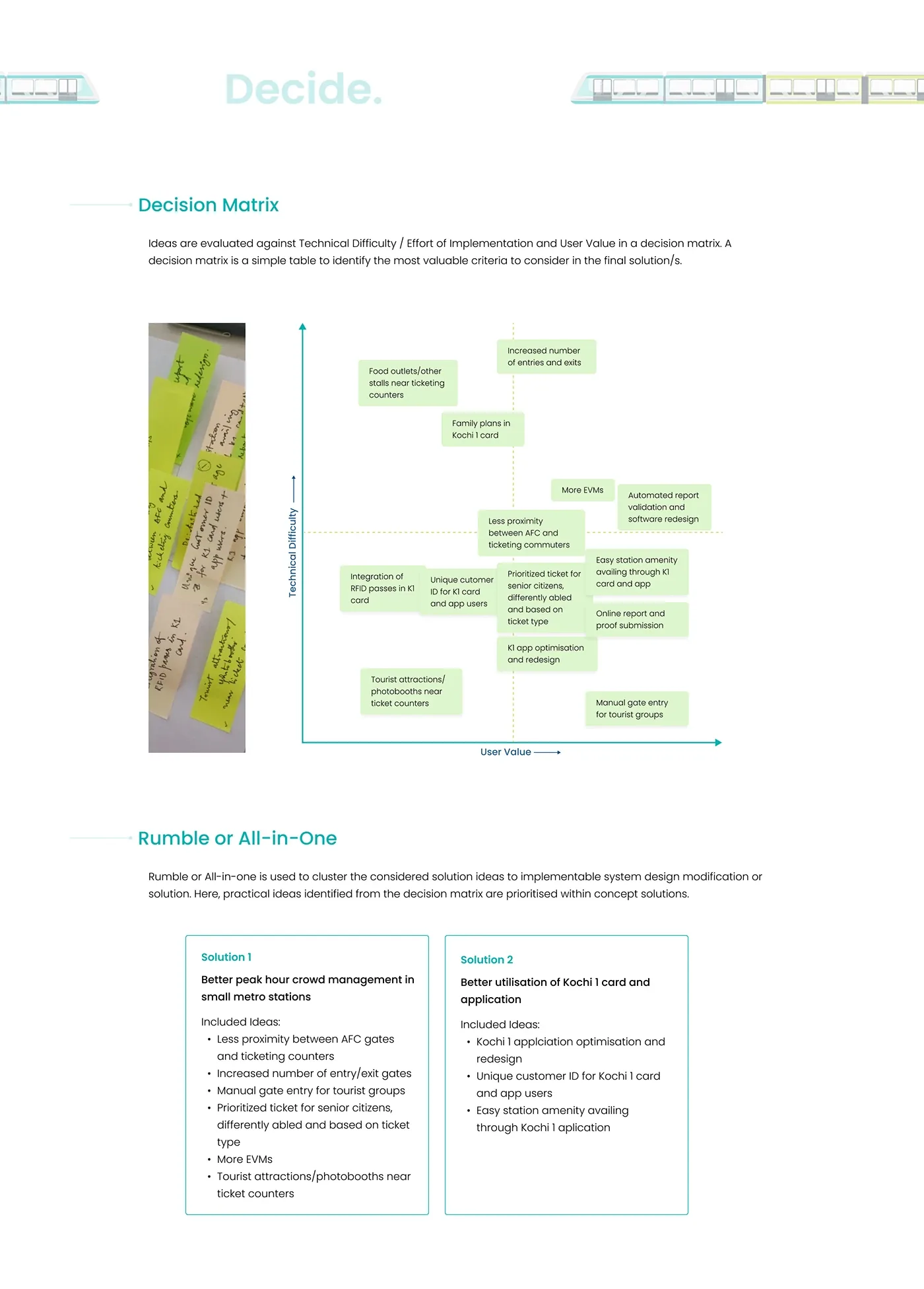
A decision matrix compared technical difficulty with user value. Ideas were then grouped into two directions: better peak-hour crowd management in smaller stations, and better utilisation of the Kochi 1 card and application.
Bring ticketing, card management, station services, and journey information into a more connected passenger experience.
05 / Experience structure
Make the passenger application easier to navigate.
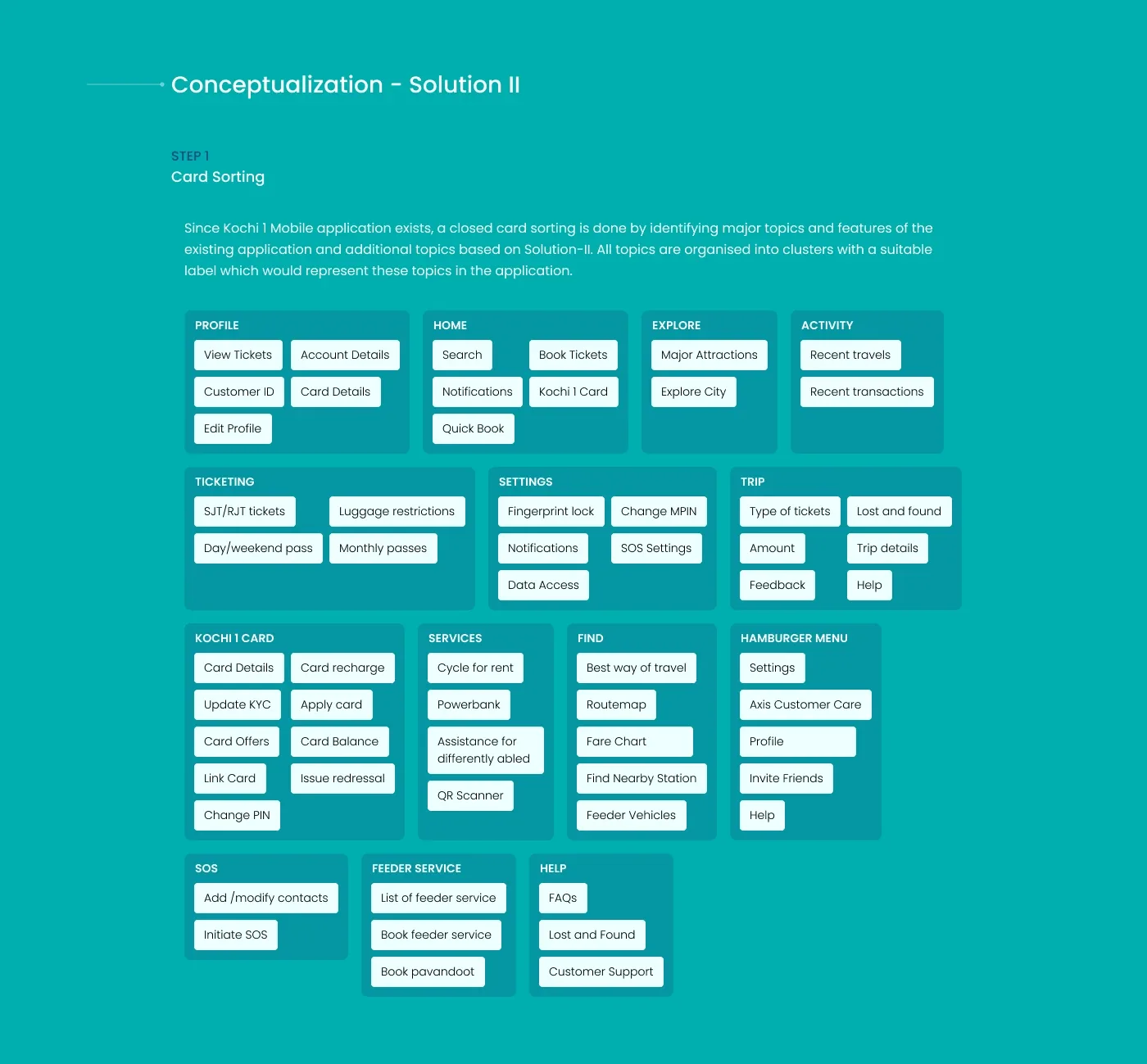
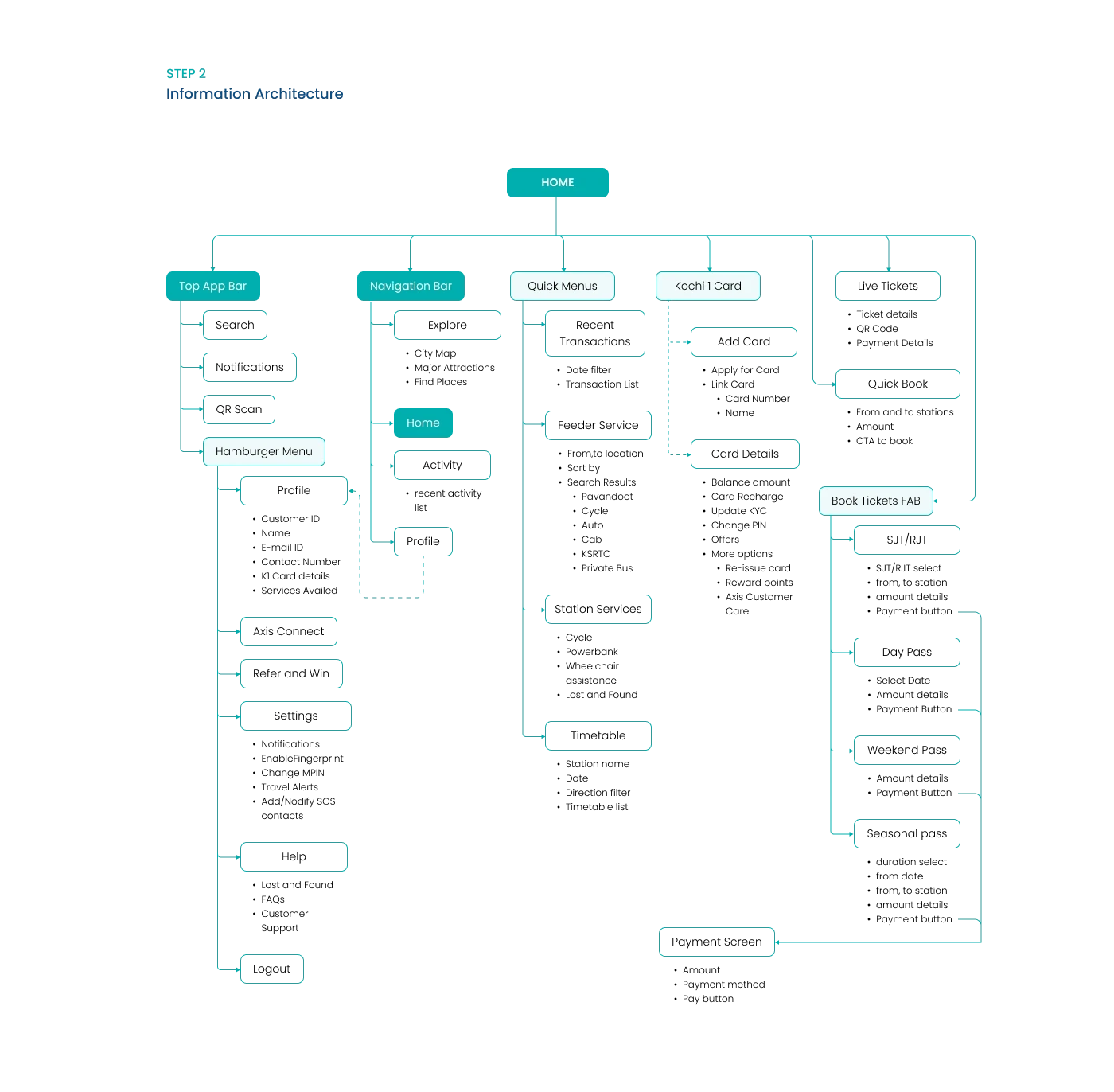
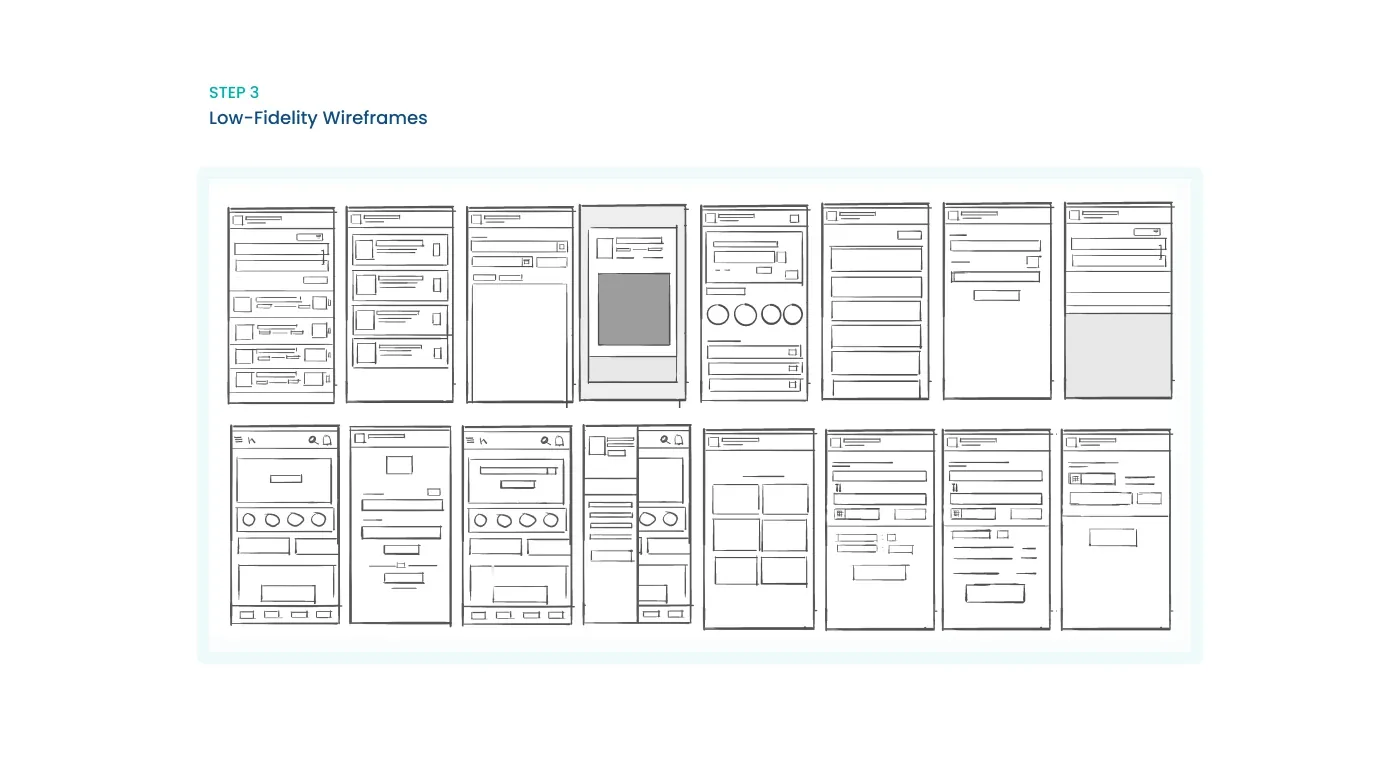
The application concept builds on Kochi 1’s existing functions and the opportunities identified in the systems study. Closed card sorting organised existing and proposed topics into coherent groups.
Connect the main journeys.
06 / The solution
A connected companion for metro journeys.
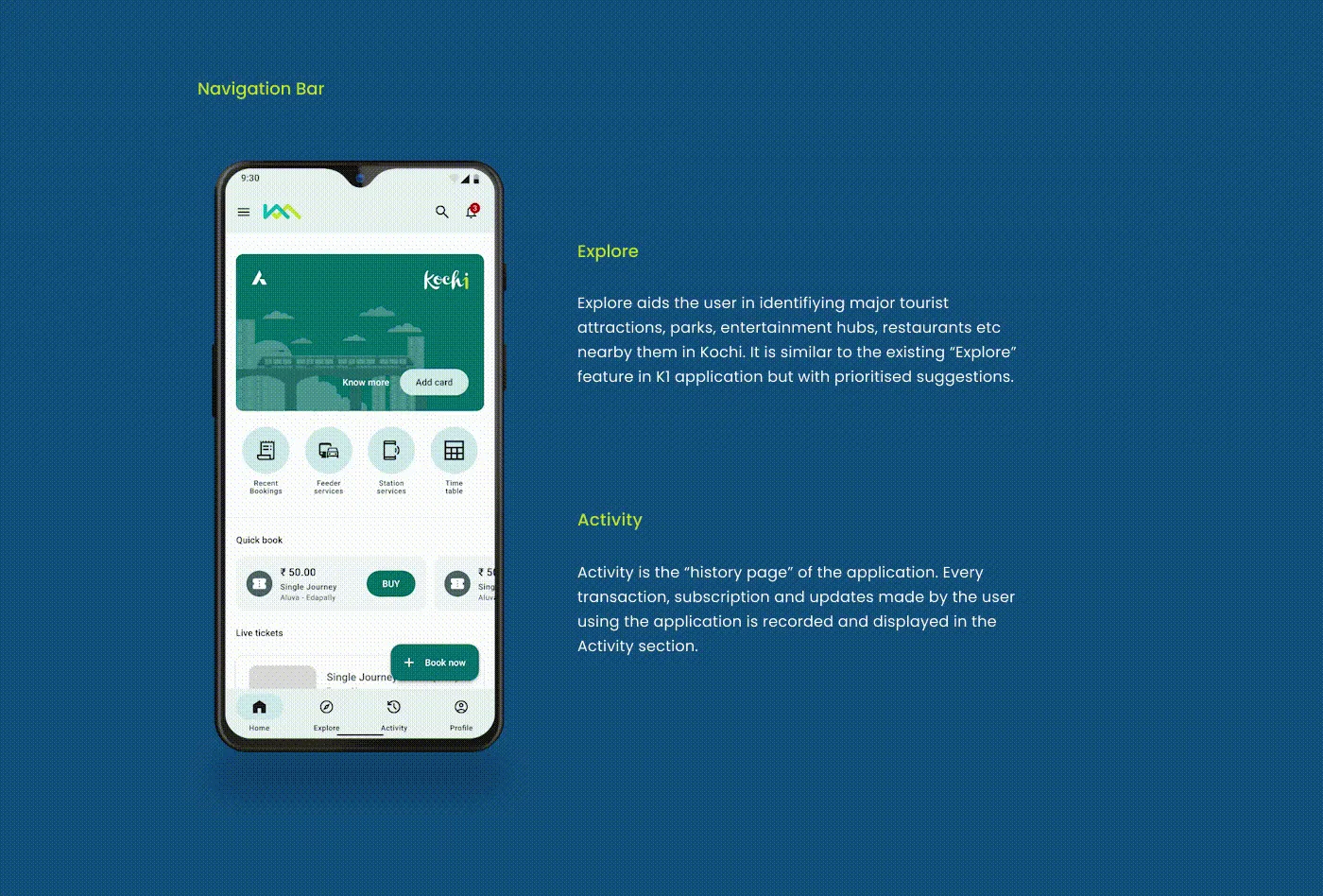
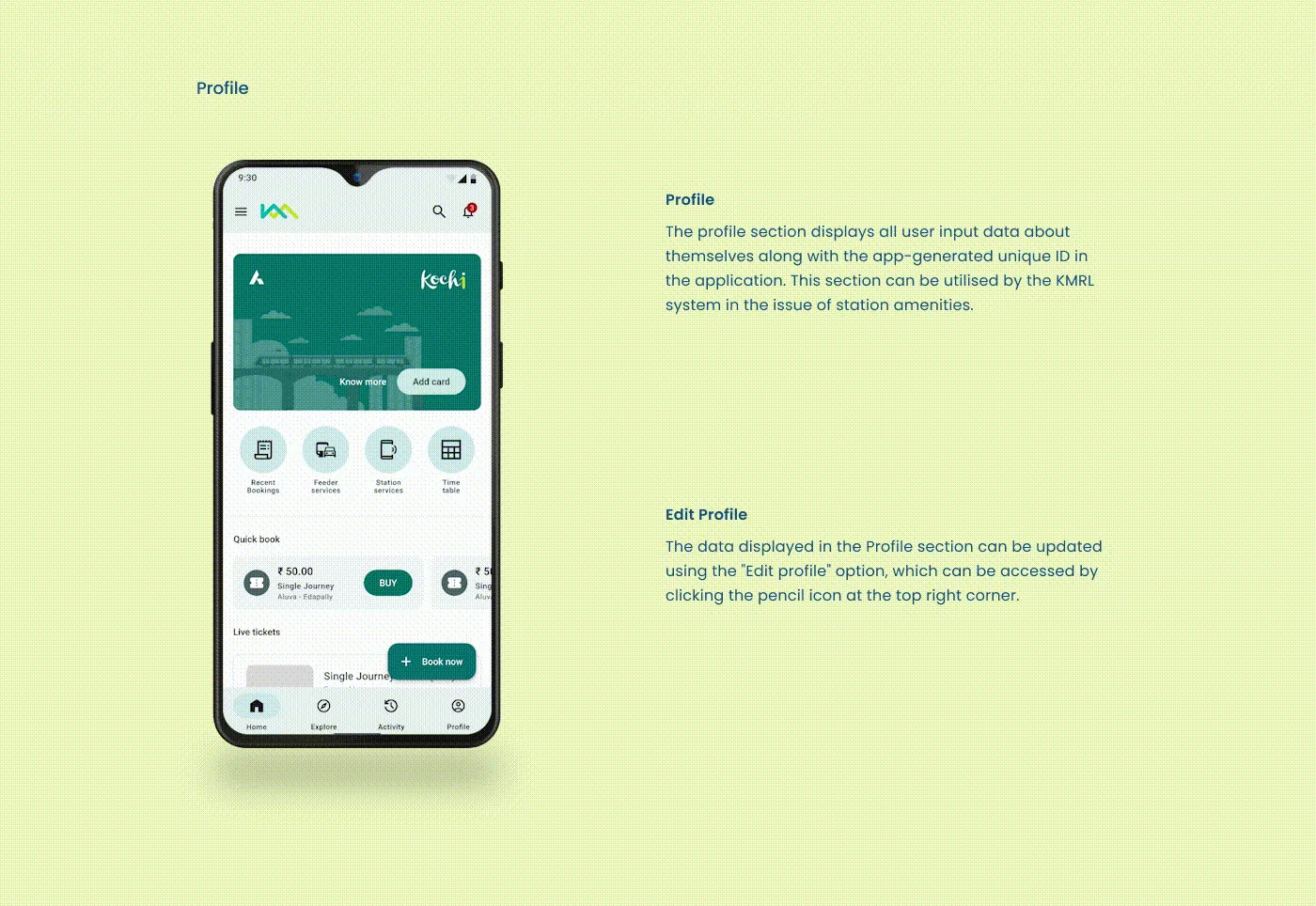
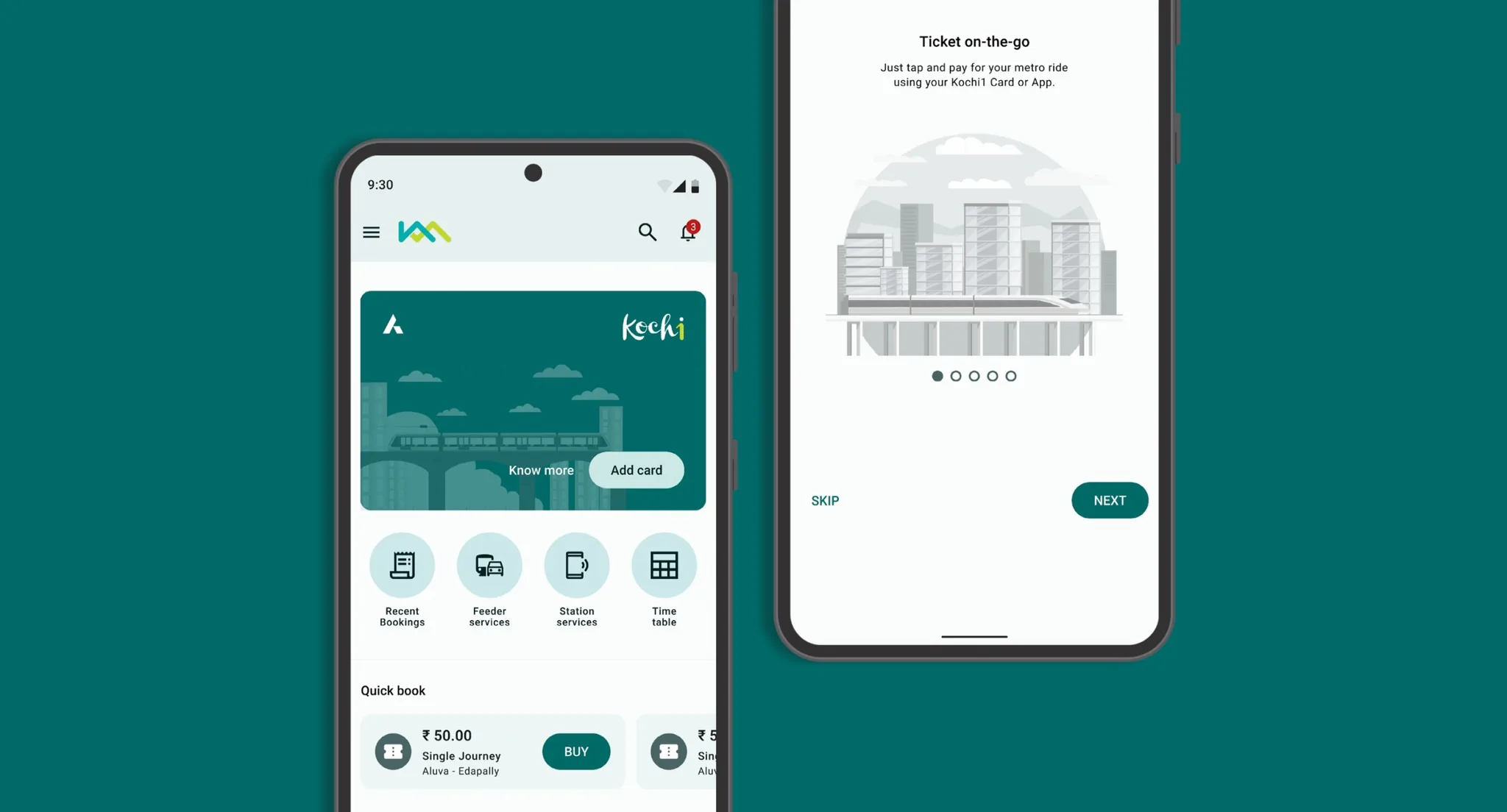
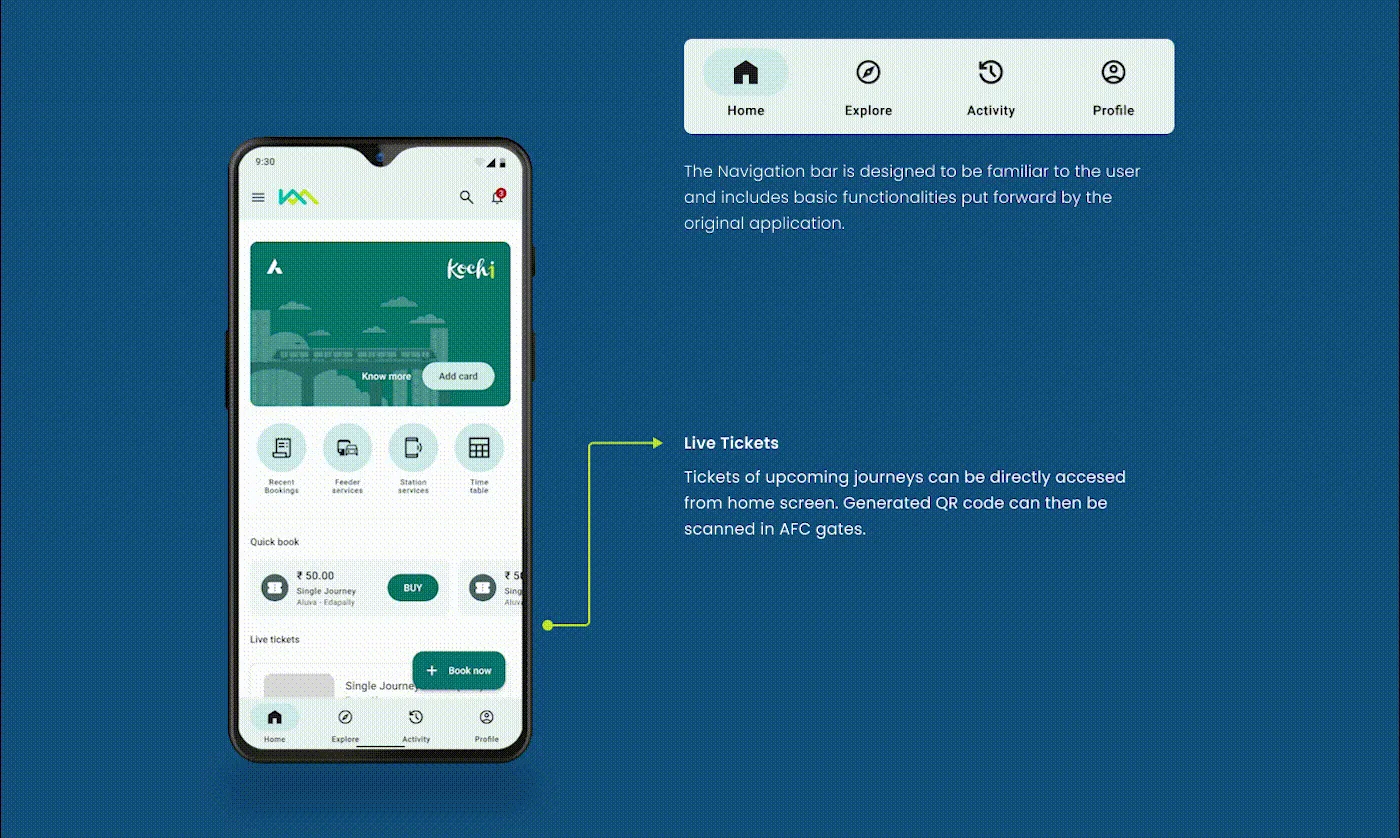
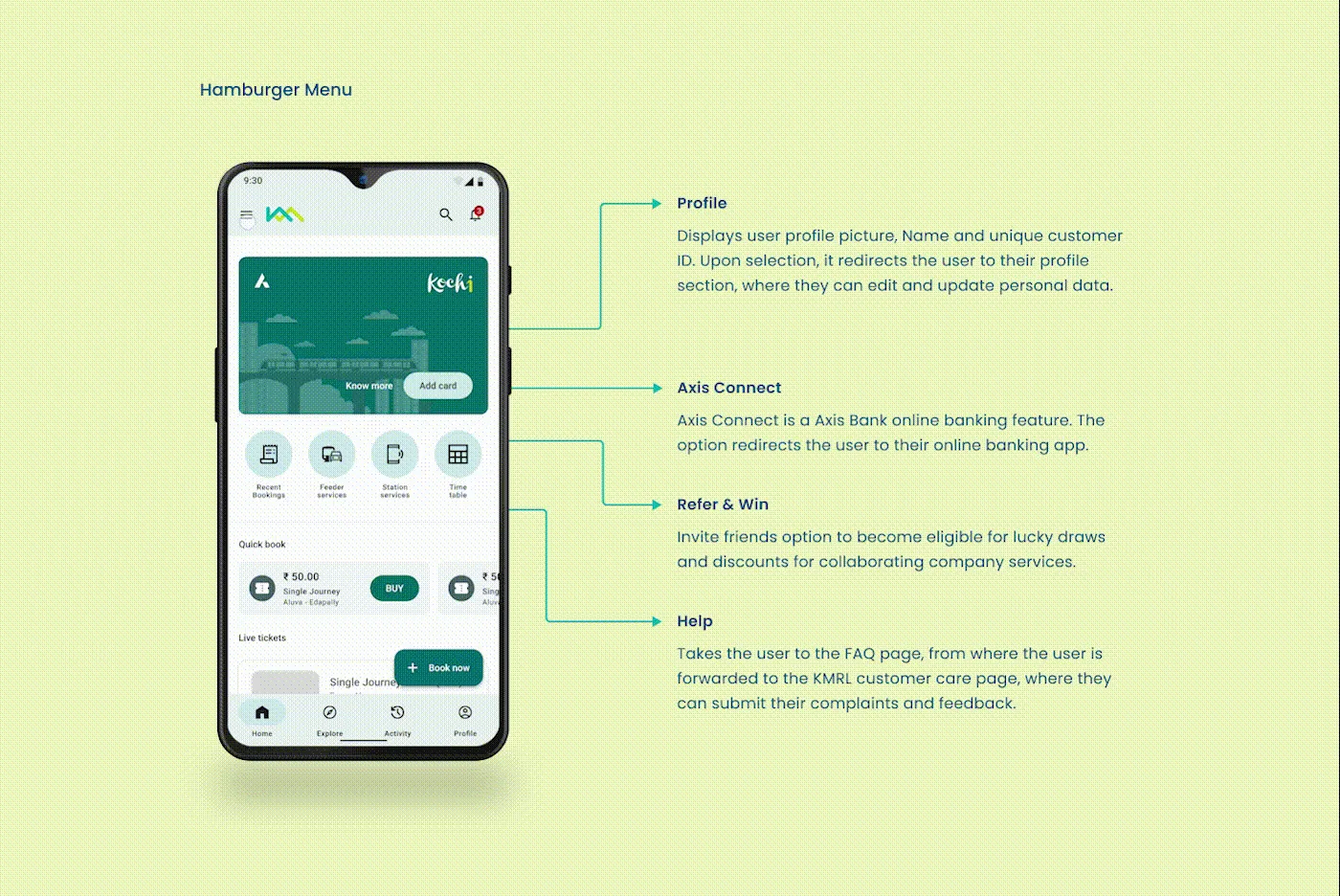
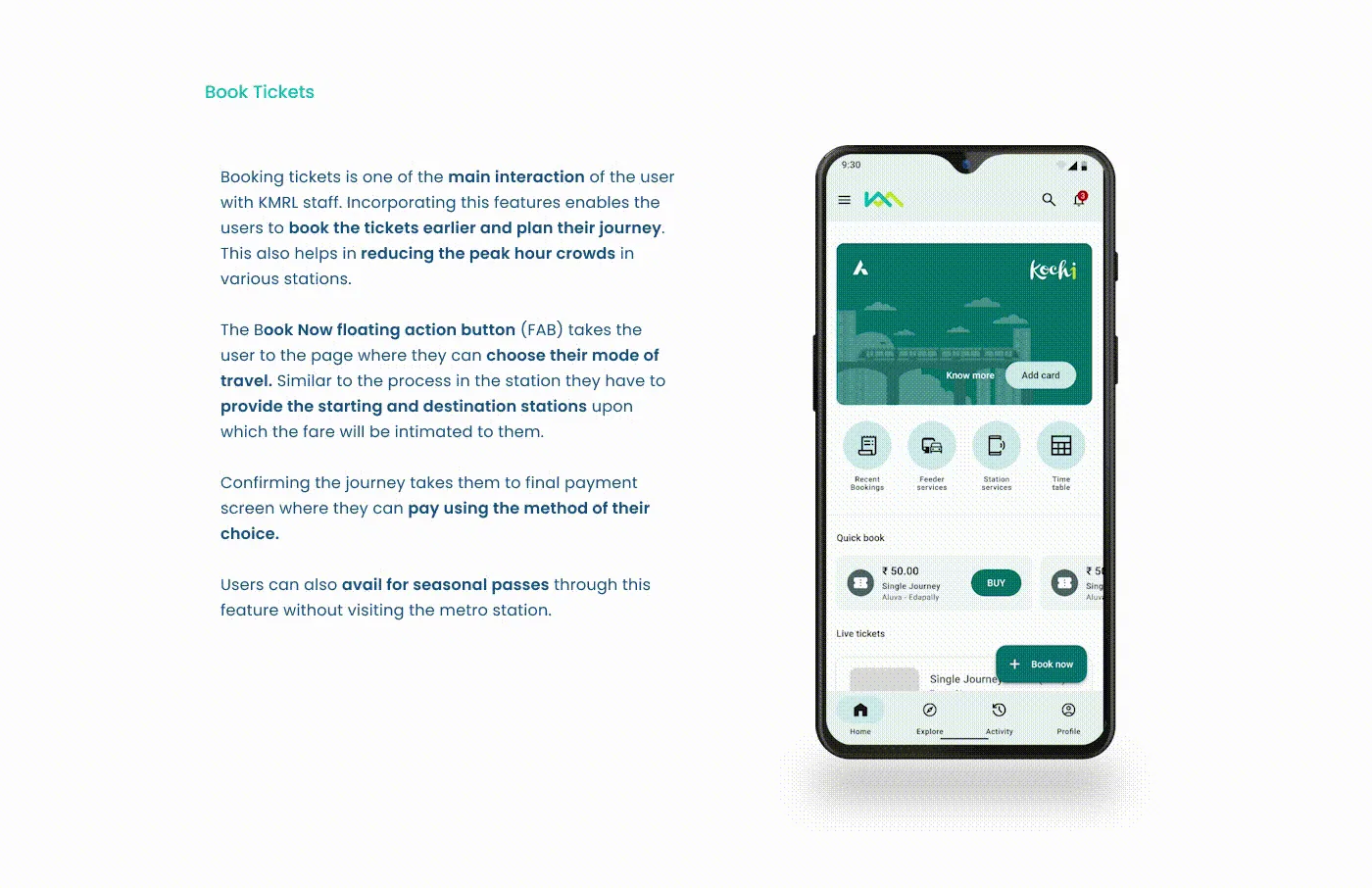
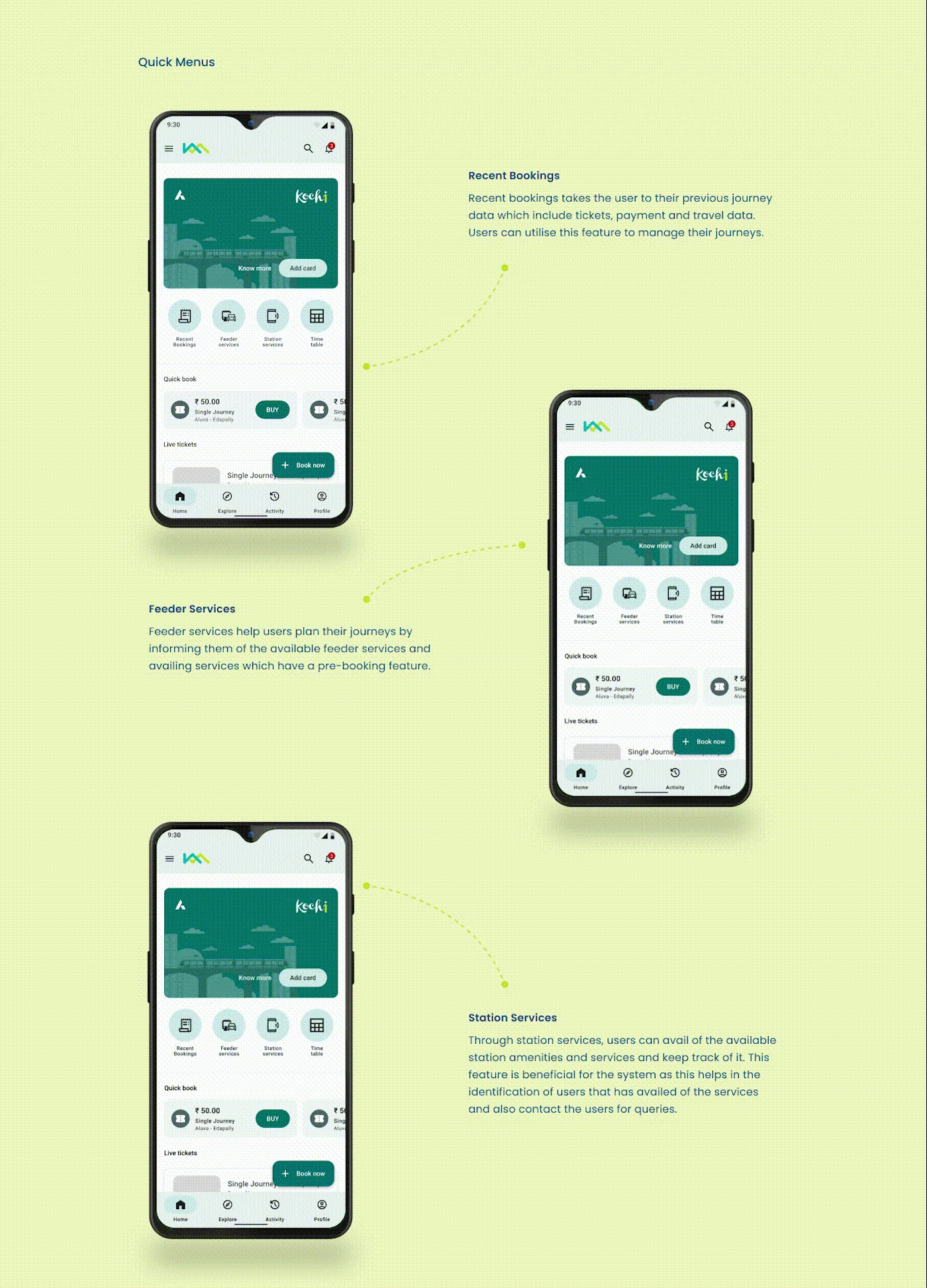
The high-fidelity concept brings everyday travel actions and supporting services together, from tickets and Kochi 1 card management to nearby stations, feeder services, activity, and help.
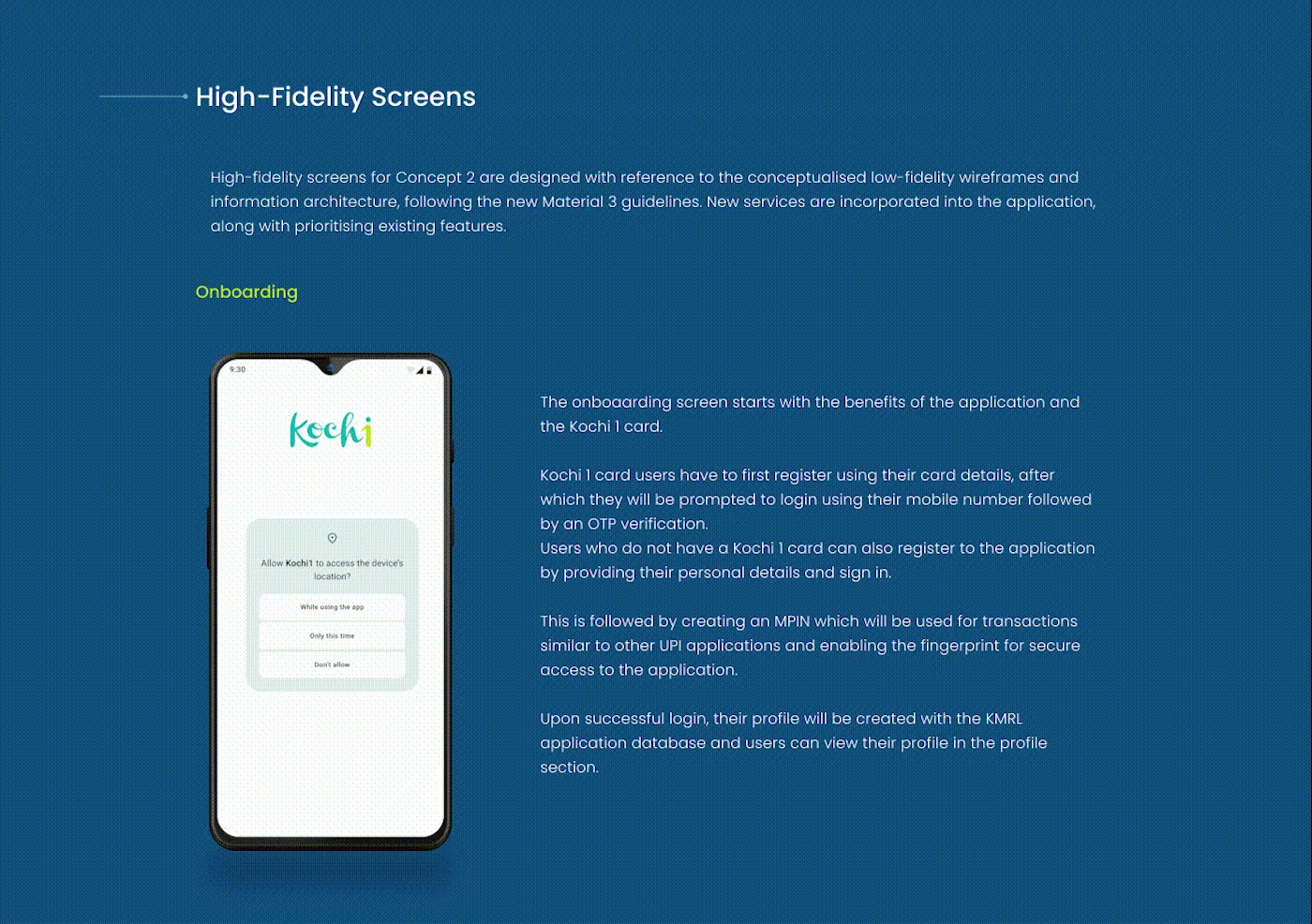
A home for the complete journey.
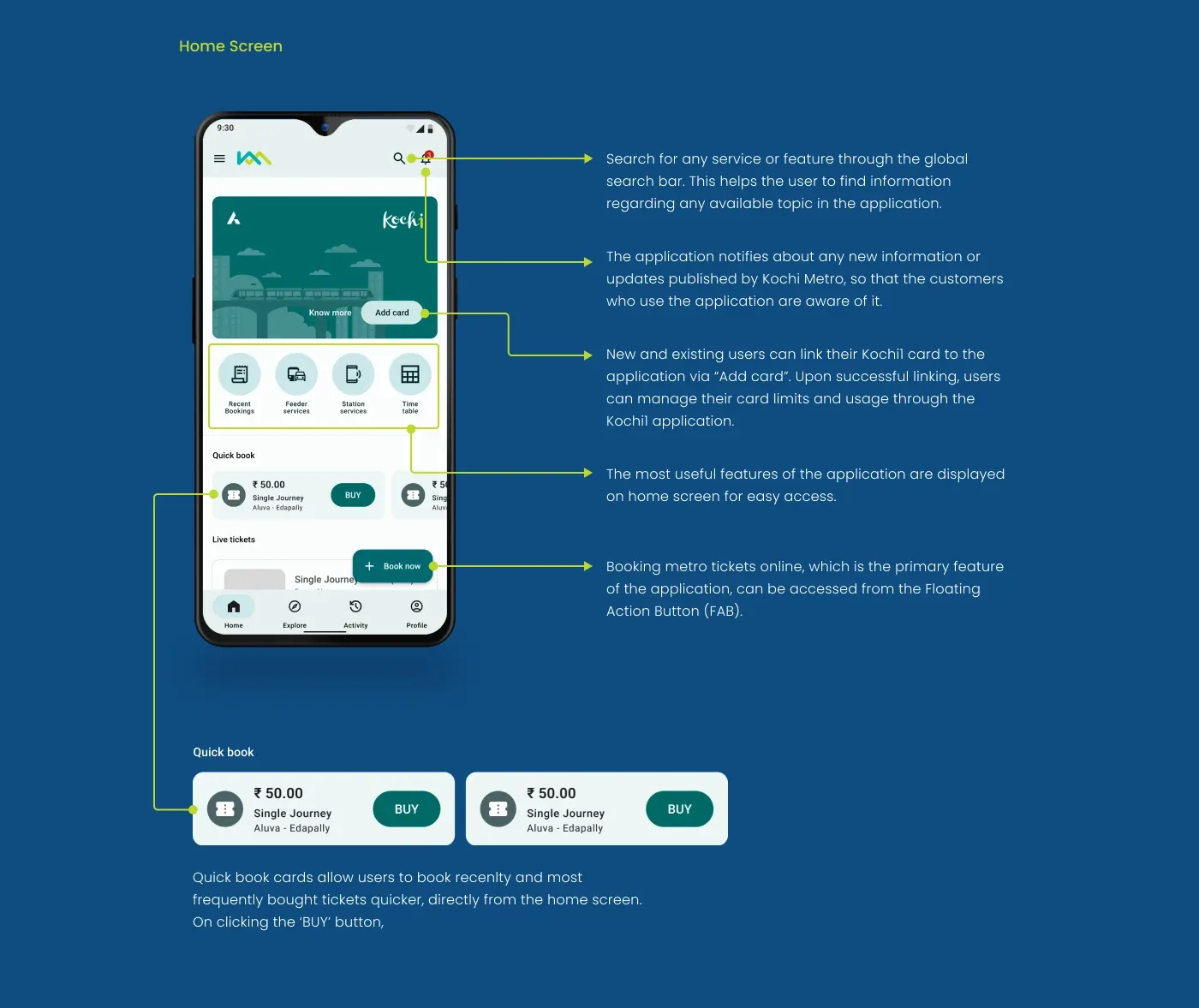
Find the right route and ticket.
Plan connections and revisit journeys.
Explore, review, and get help.